These are adjectives that sprung to my mind after seeing Deirdre Kinahan’s play, ‘Adrift’ at An Grianan theatre this week.
A contemporary domestic drama, it offers several personal stories – in parallel worlds – in a 70-minute one act, all lifting the lid not just on modern Ireland’s troubled relationship with immigration but the very notion of Irishness itself, sensitive social issues, including suicide and homosexuality, once long hidden but slowly revealed in the uncomfortable light of day.
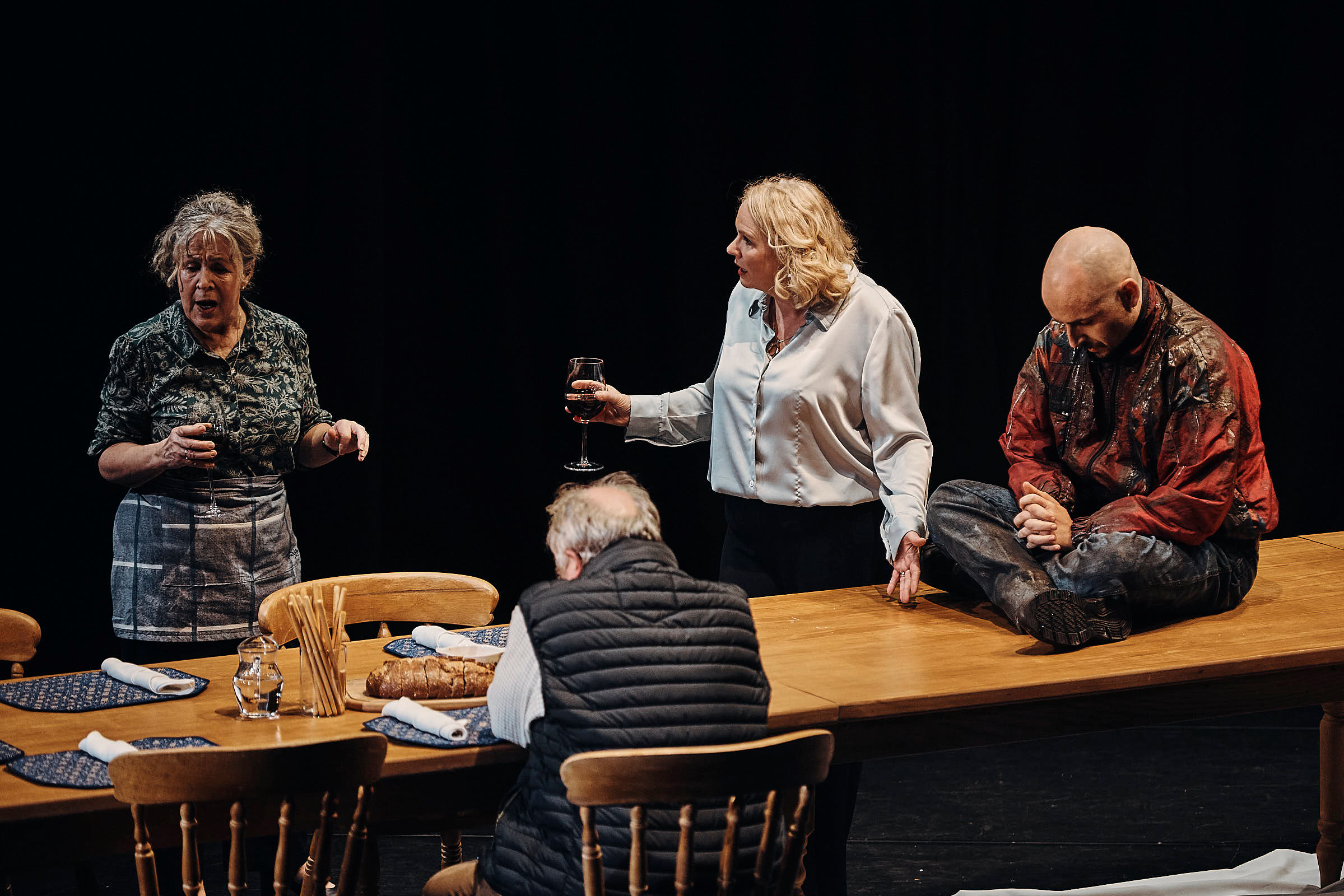
The setting is a rural Irish home with family members celebrating a sibling’s birthday, but light-hearted banter soon dissolves into rancour as confrontations arise over a sister’s relationship with a refugee from Syria. The views that emerge are no doubt ones being aired in homes, pubs and restaurants throughout Ireland today about the increased influx of refugees and the effect on ‘social normality.’
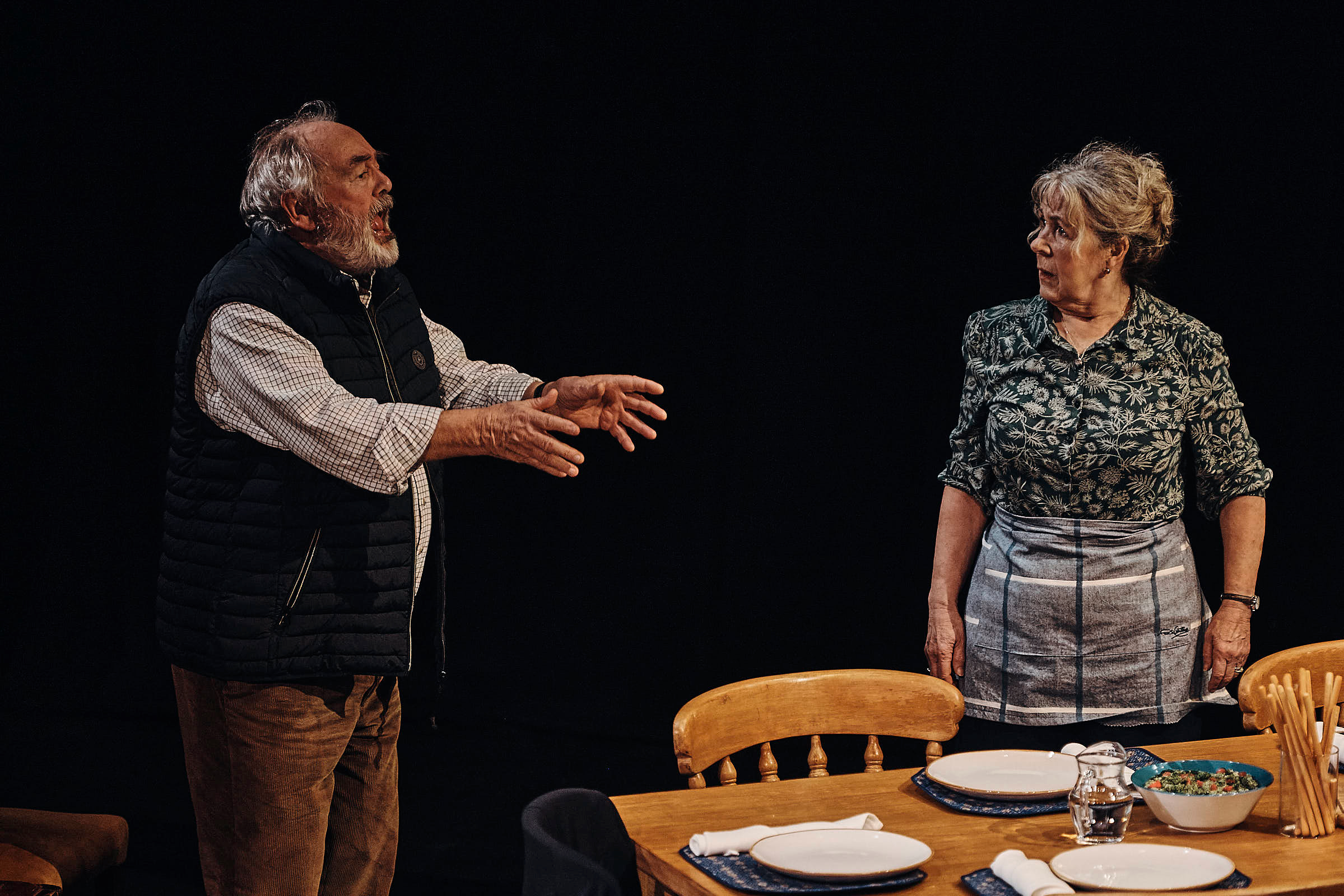
Kinahan highlights the hypocrisy of those accusing refugees of causing all the nation’s problems such as homelessness, long hospital waiting lists, rising violence, and their failure to acknowledge these problems have been around for generations, long before the word ‘refugee’ was common parlance here.
She does so by showing Ireland’s sad history of shipping its own refugees to other countries, as in the case of the no-nonsense character, Bridget, played so convincingly by Catherine Byrne, who leaves a workhouse in Oldcastle to work for a bishop in America “who liked his servant girls straight off the boat,’ then becomes a prostitute and brothel owner in New York and Boston; and a gay man, Conor, torn by guilt, played plaintively by Darragh Feehely, who flees from Dublin to London, then San Francisco, and contracts Aids.
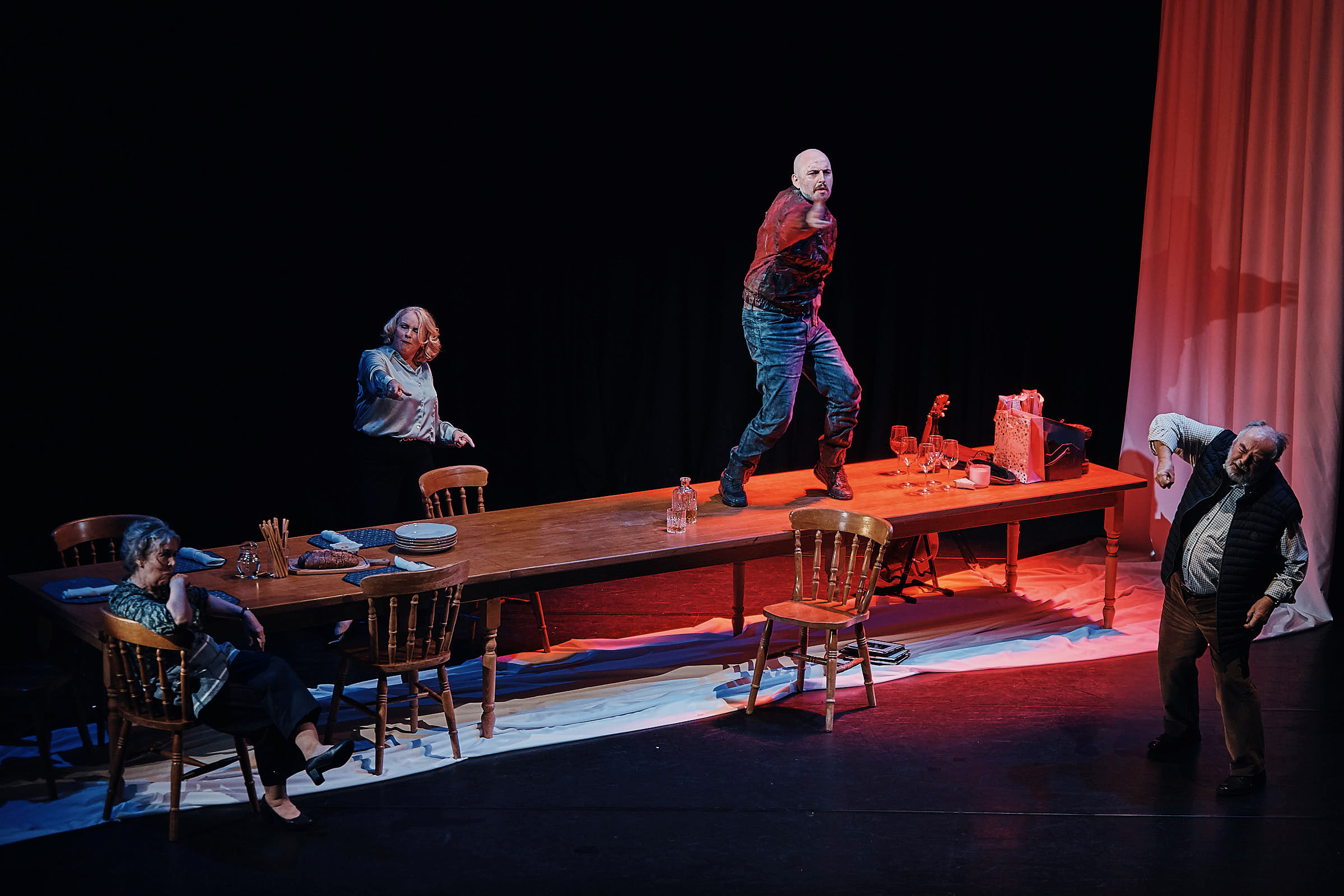
The two characters’ unusual presence on stage (best not to spoil the surprise) adds even more dramatic effect to their stories, both illustrating historical realities of Irish emigration.
As Conor says fiercely in one scene, “No dogs, no Blacks, no Irish, no unvetted aliens, no queers. Different labels, same smear, same hate. There will always be those of us who have to leave.”
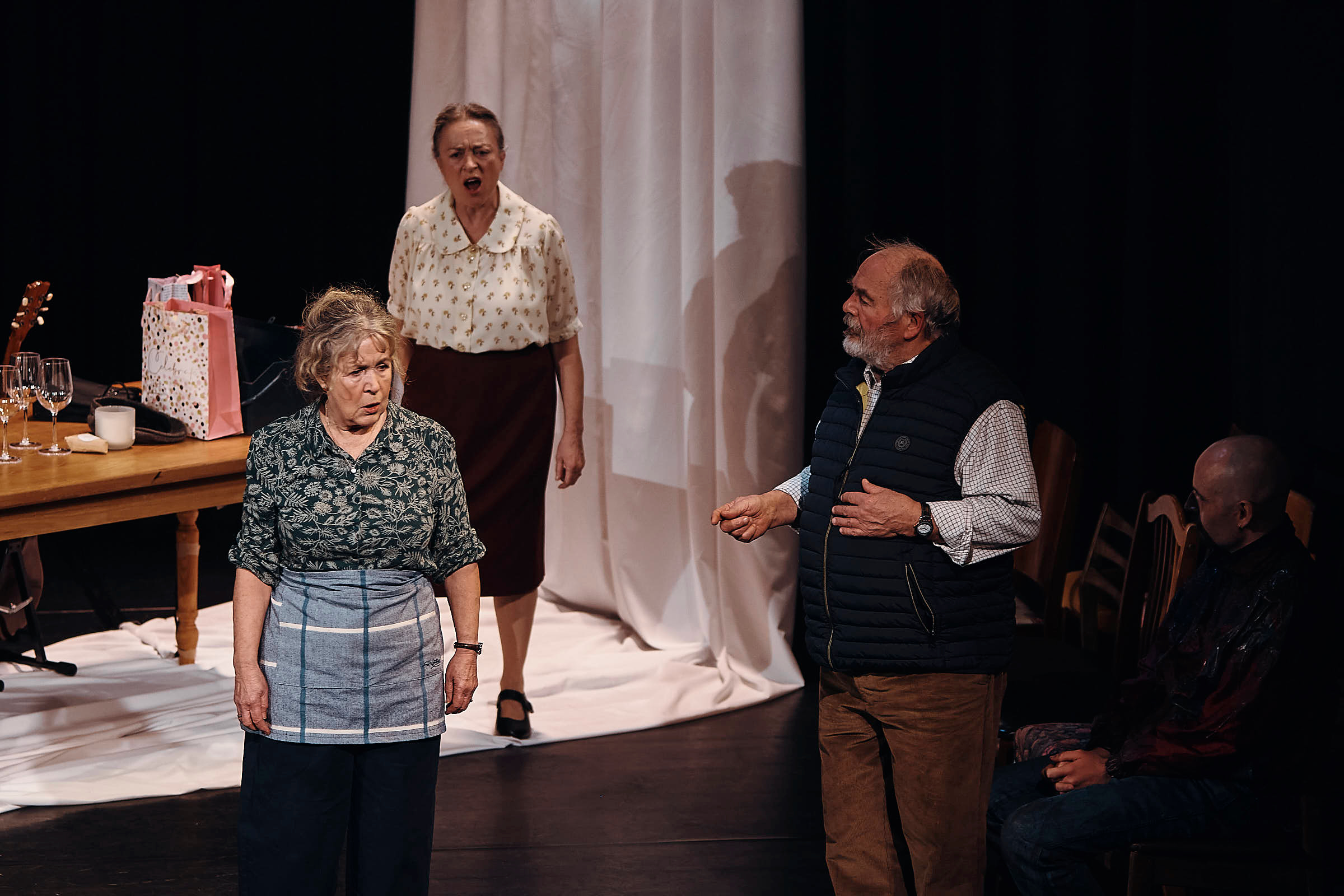
Kudos go to other cast members – Janet Moran, who plays Mona, a combative, fiesty hotel owner; Bríd Ní Neachtain who plays Kathleen, a level-headed widow who has struck up a friendship with the refugee; and the bearded John Olohan who plays, John, an amicable brother who hides a dark family secret, as well as Rashfan Shoulbakey who plays Faez from Syria.
Stagecraft for ‘Adrift’ is clever in its simplicity.
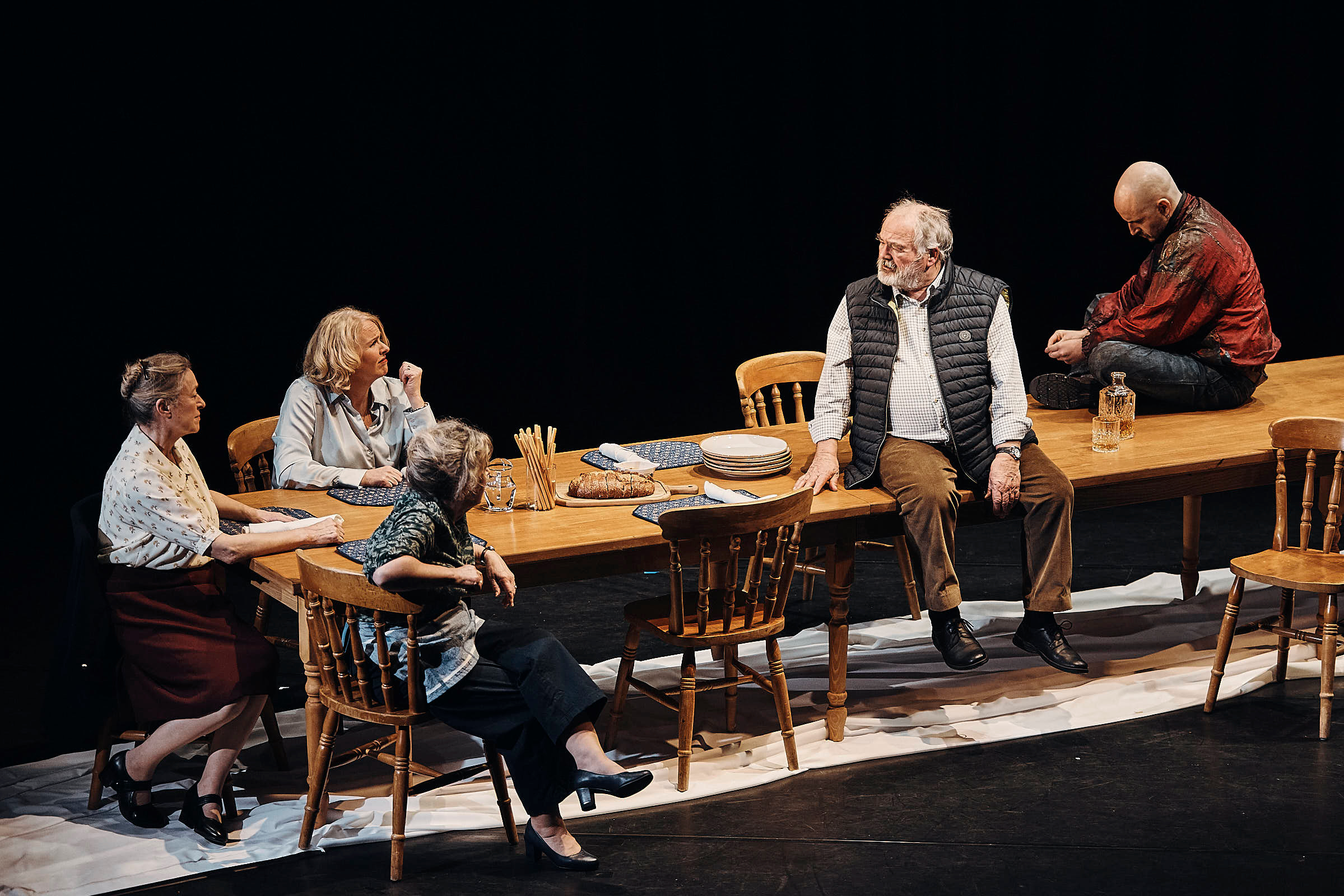
Even before the play began, I was intrigued, staring at the longest table I’ve ever seen on a stage, as well as the most chairs, which pre-show were occupied by some audience members. Speaking to me from her home in Meath afterwards, Deirdre, the playwright, said, “This was a concept created by the stage designers, a symbolic gesture indicating how important it was for everyone to come around the table and openly discuss such a key issue as immigration.”

While ‘Adrift is set in Ireland, having lived in countries such as Romania and the US, many of the themes in the play struck me as universal. Attendance on the evening also boded well for the future of Donegal theatre as some parents were accompanied by their children, many of whom were members of local drama groups.
Adrift was presented by Nomad Theatre Network in association with Once Off Productions and directed by Marc Atkinson Borrull.

