Sleeping in a sacristy, that intriguing place where priests dress before Mass, was a first for me.
Born Irish Catholic, I was ushered every Sunday morning – often to my great annoyance – to conduct my so-called religious duties, their mystery steeped in an anachronistic language few people understood with the priest dressed in intricately-woven vestments to suit the occasion and impress his listeners.
But I’d never had the occasion to step inside the semi-secret room adjacent to the altar known as the sacristy or ‘sacristia’ in Portuguese where – as if by magic – the priest ‘transformed’ himself from an ‘ordinary’ man wearing trousers and shirt into an ‘extraordinary’ one dressed in colorful flowing regalia.
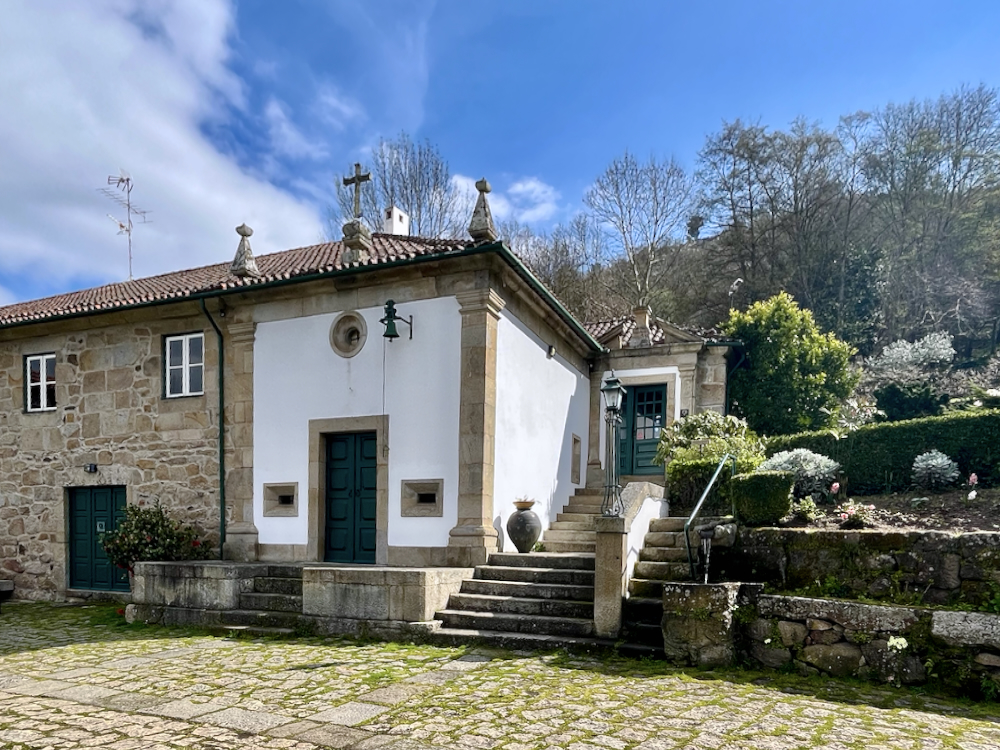
But at the 500-year-old Quinta da Mata, a hotel member of the Solares de Portugal, near the town of Chaves in northern Portugal I was given this golden opportunity, for here our bedroom had been the sacristy of a private chapel for hundreds of years.
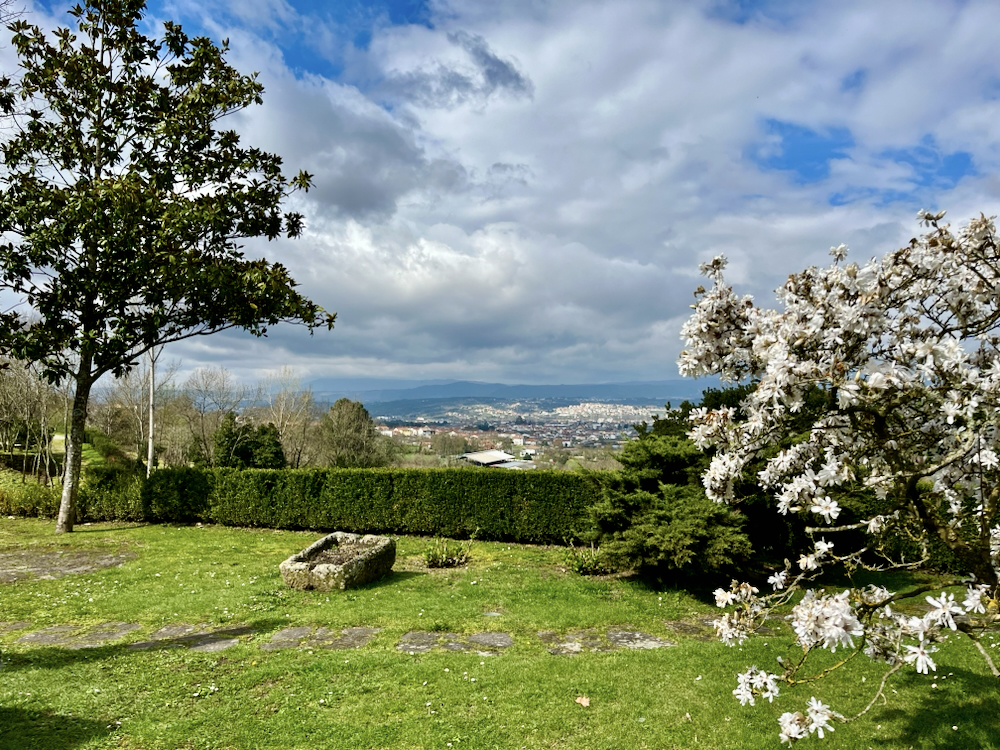
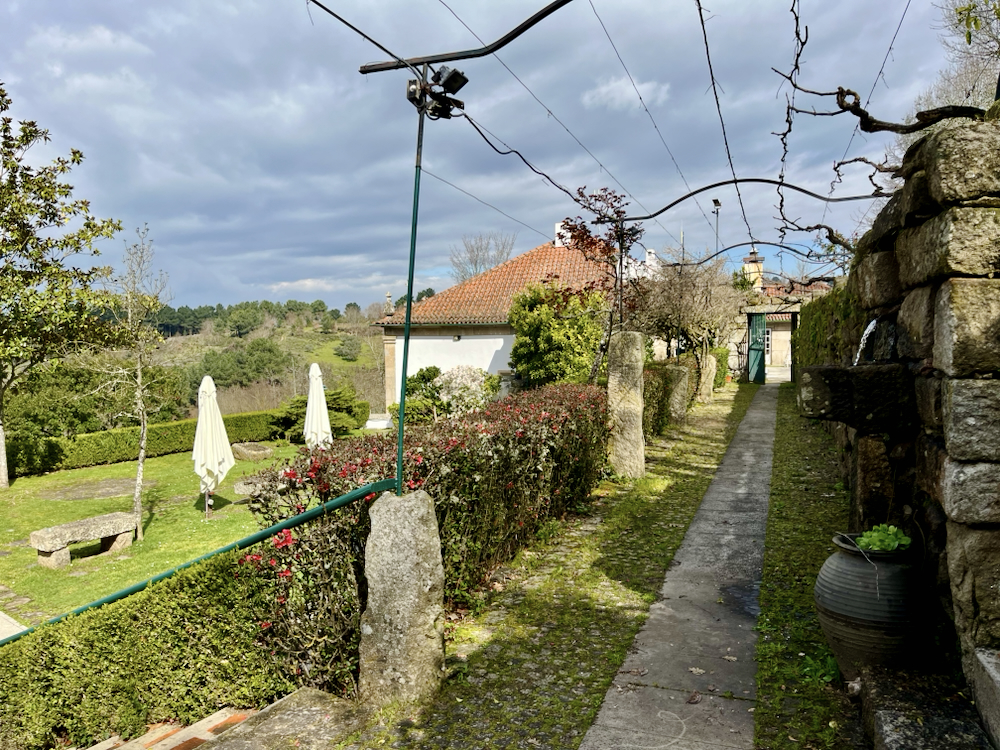
Designated a ‘forest farm,’ the 17th century Quinta da Mata is nestled amidst hectares of land at the end of a winding driveway deep in the countryside with panoramic views over the hillside of Serra do Brunheiro where sheep munch leisurely on grassy pastures. Here a past era comes to life in the form of old stone walls, varnished wooden ceilings, tanned terracotta floors and vintage furnishings dating back centuries. You might even enjoy a meeting with the resident ghost, LaCerda. Ask Luis or Geral, father and son at the property, for details.
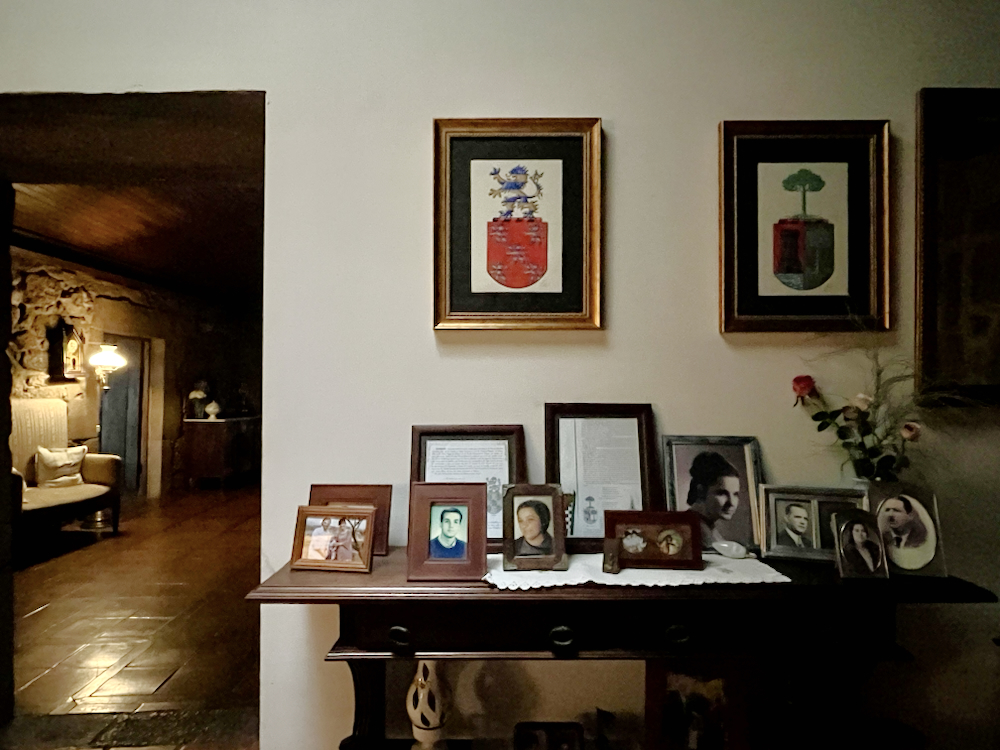
Our suite, one of six rooms, four doubles and two twins, was an impressive size, encompassing dining-room, living-room, bedroom and bathroom located on the first floor, midway along a tiled corridor where a glass-fronted cabinet of artefacts and framed photographs traced the history of the quinta.
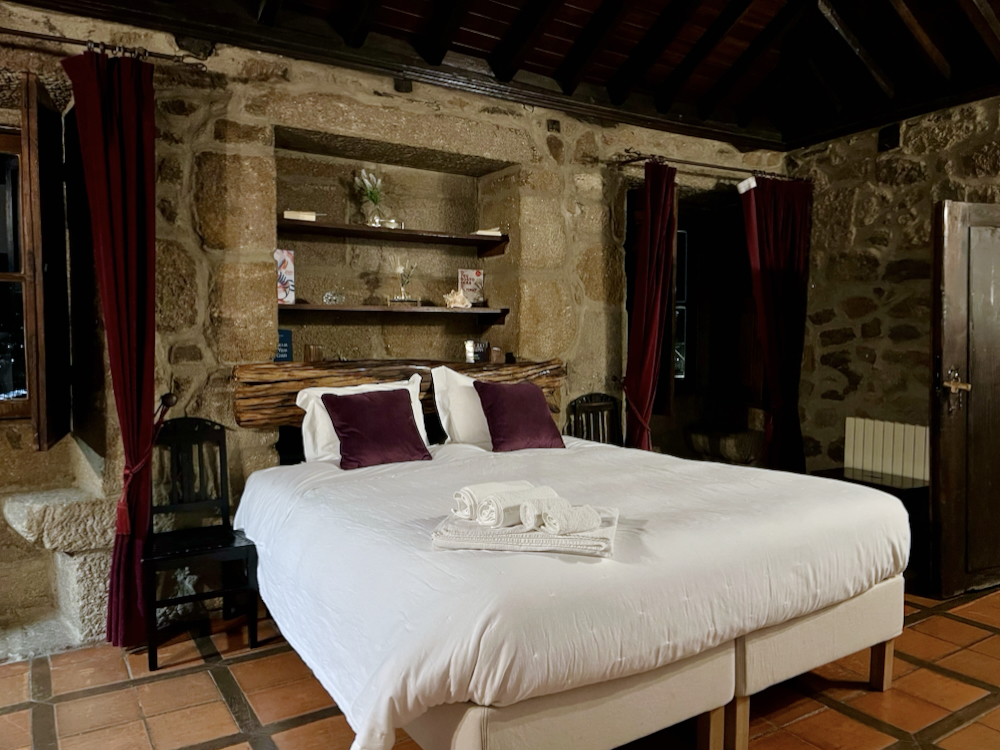
Our bedroom featured wood-framed windows with stone love seats offering clear views across tennis courts, sheep grazing in the sloping fields and on to the ochre roofs of the town and the forested mountain beyond.
The headboard was of bare polished lengths of wood, behind which were inlaid shelves of books and ornaments. A side door opened intriguingly to an interior balcony overlooking a small private chapel, used by families for generations.
Interestingly, a standing clothes hanger was one priests would have used for vestments they’d have worn for Mass. Other furnishings included a large cupboard, a standup TV and a soft sofa.
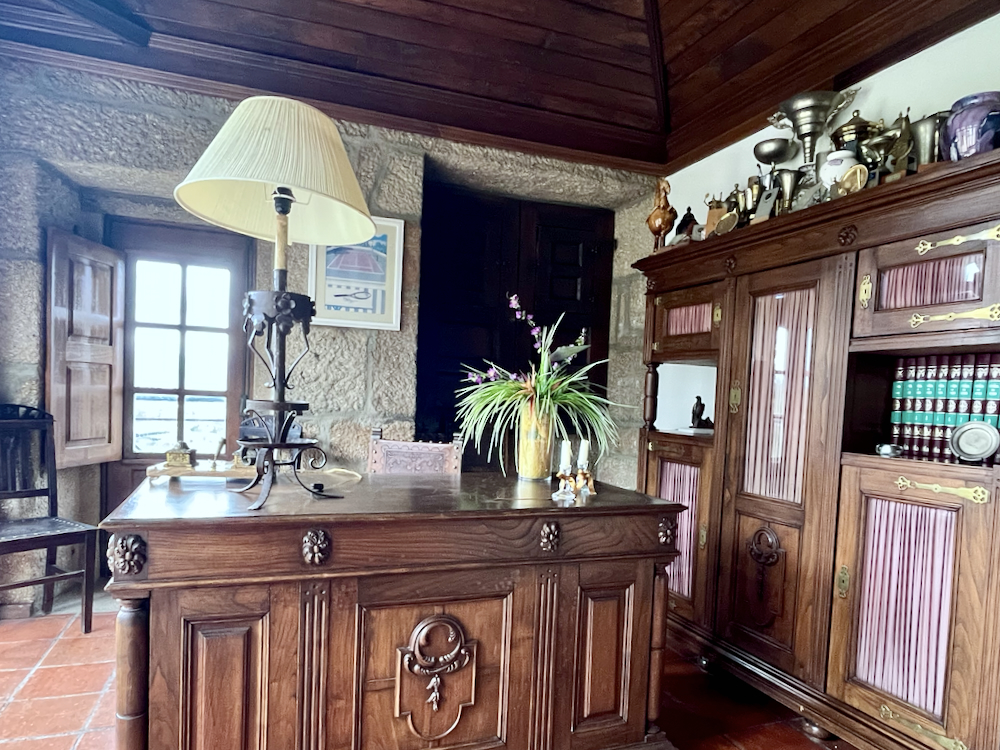
The adjoining living-room and dining-room contained a veritable treasure trove of vintage trappings including antique brass standing lamps, intricately carved wooden cabinets and dressing tables filled with crystal glasses, vases and porcelain cups and saucers and a framed suit of arms of the Barroso family.
Decorative plates adorned the walls, their designs depicting idyllic rural scenes from a bygone age of horses, castles and towers. There was also a stone-framed fireside with thick chunks of wood for fuel and leather armchairs and a sofa in front for comfort.
Other unique artefacts included toy dolls in traditional colorful Portuguese costumes, candelabra, framed paintings and a gilt-edged mirror. An office with a central desk featured a wall-to-ceiling mosaic of glass windows overlooking the property’s cobblestone driveway bordered by flower beds and ornate lamps.
A collection of sports trophies stood atop a cabinet.
White tiled walls with a floral motif granted our bathroom a sense of rusticity, as did vintage lighting above the sink.
The demesne around the house offers guests lots of opportunity for exploration, including garden paths, an open-air swimming pool and a marquee for outdoor events such as weddings.
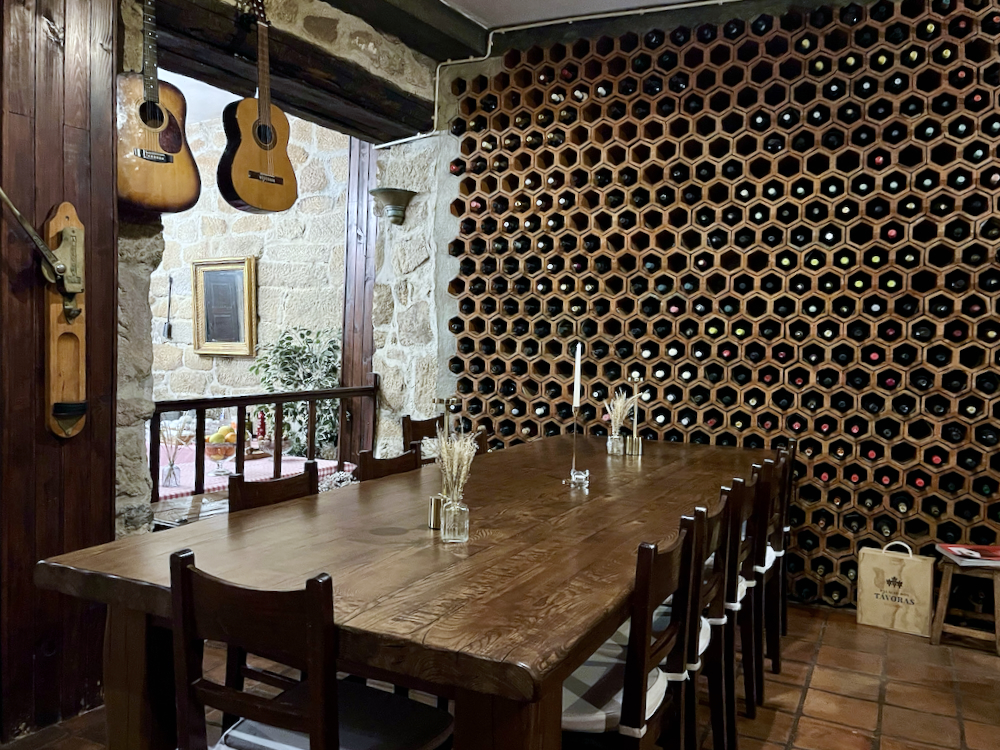
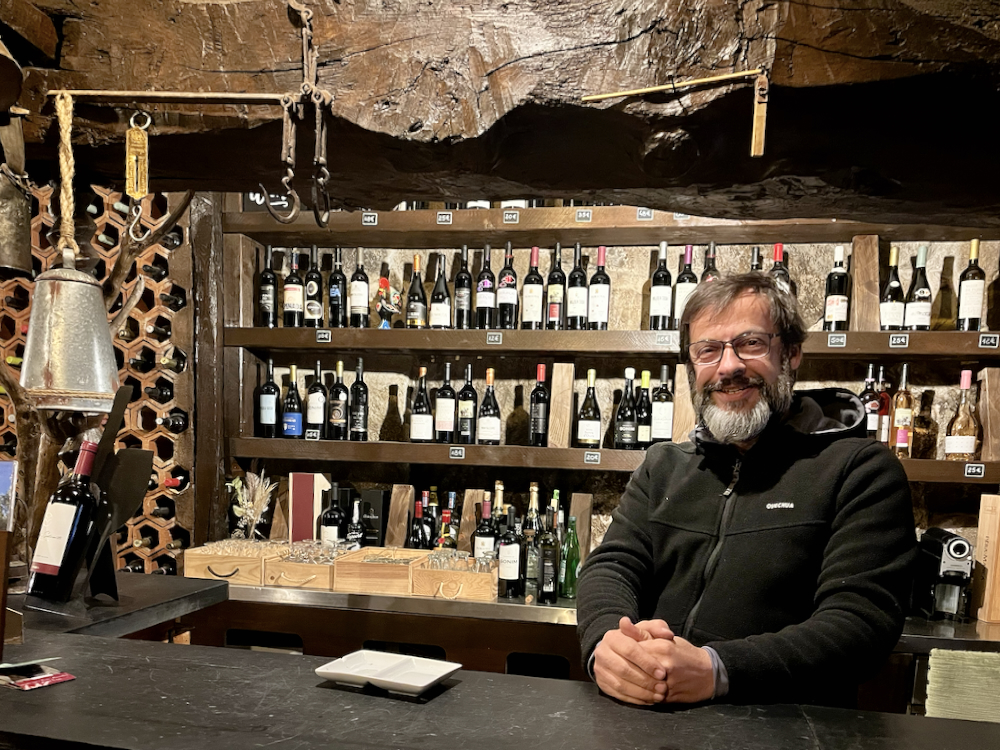
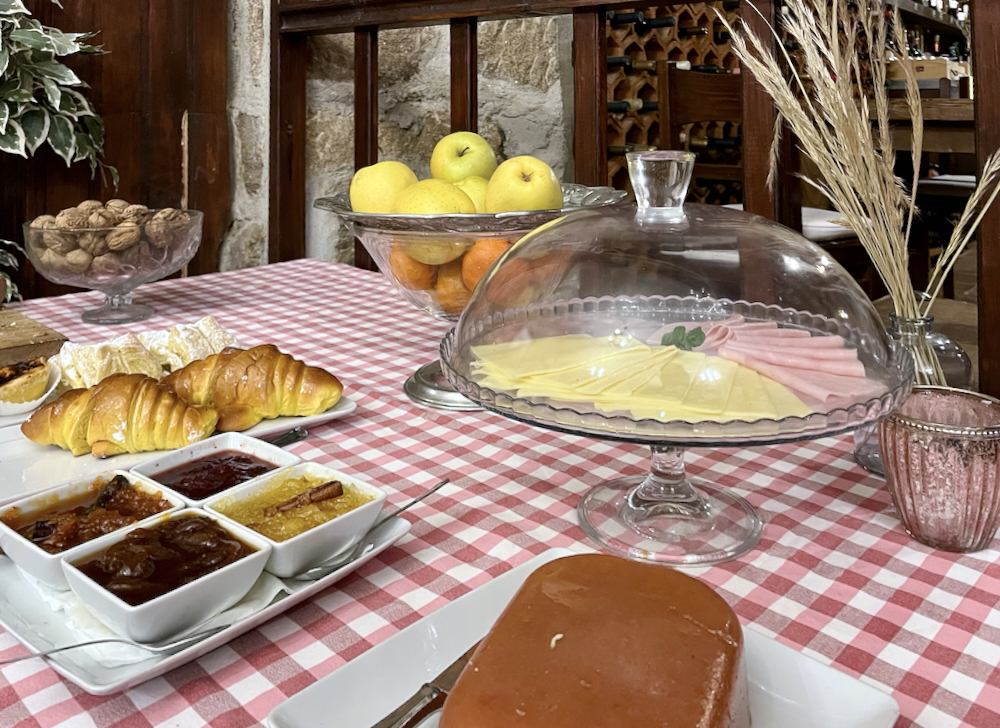
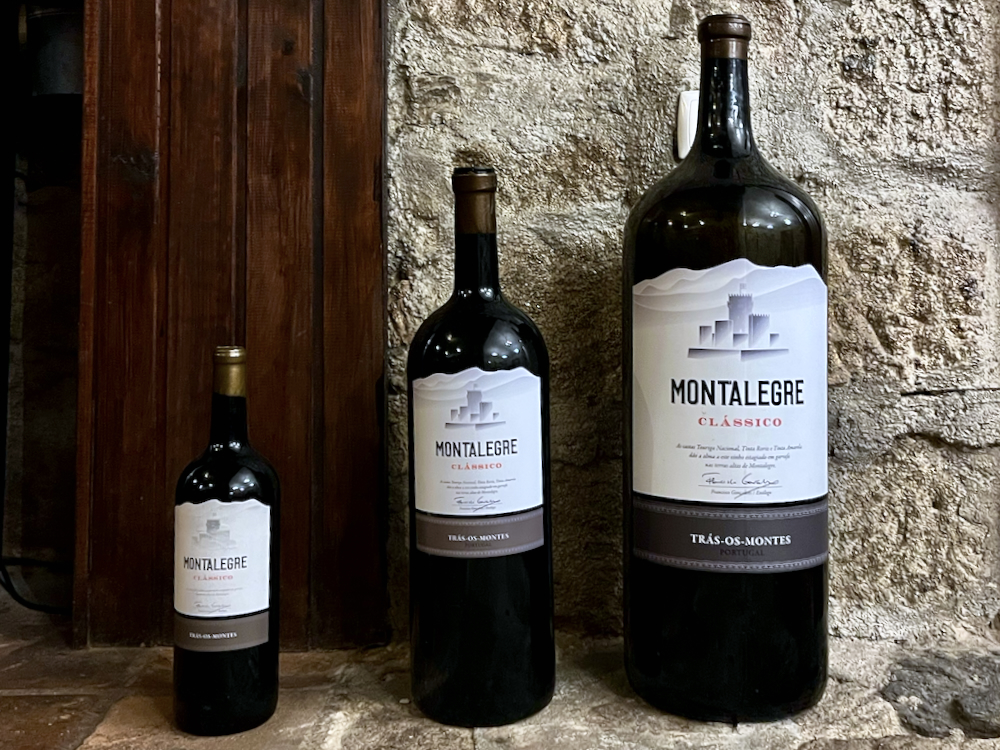
Buffet breakfast, complete with eggs, homemade jams, breads and local pies, is hosted in a ground-floor room akin a refectory with long wooden bench tables for large groups and smaller ones. In one corner is a well-stocked bar. Be sure to ask Luis about his wine selection of which he is very proud and is well-versed in matters of the grape.
My heartfelt thanks to Maria do Ceu Sa Lima, friendly marketing director of Solares De Portugal who organised my stay at Quinta da Mata. Founded in 1983, Solares De Portugal promotes the organisation’s upscale historic hospitality members throughout Portugal including manor houses and stately homes, country estates and farms and cottages and rustic houses.

