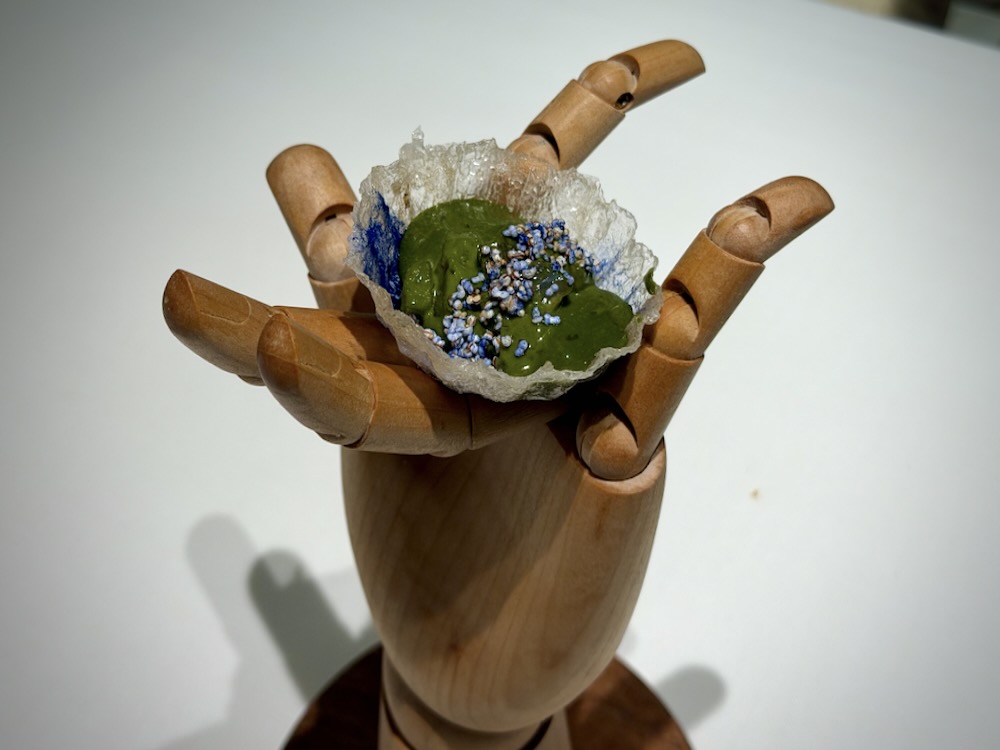
I’ve never had food presented to me in the palm of a hand carved from wood.
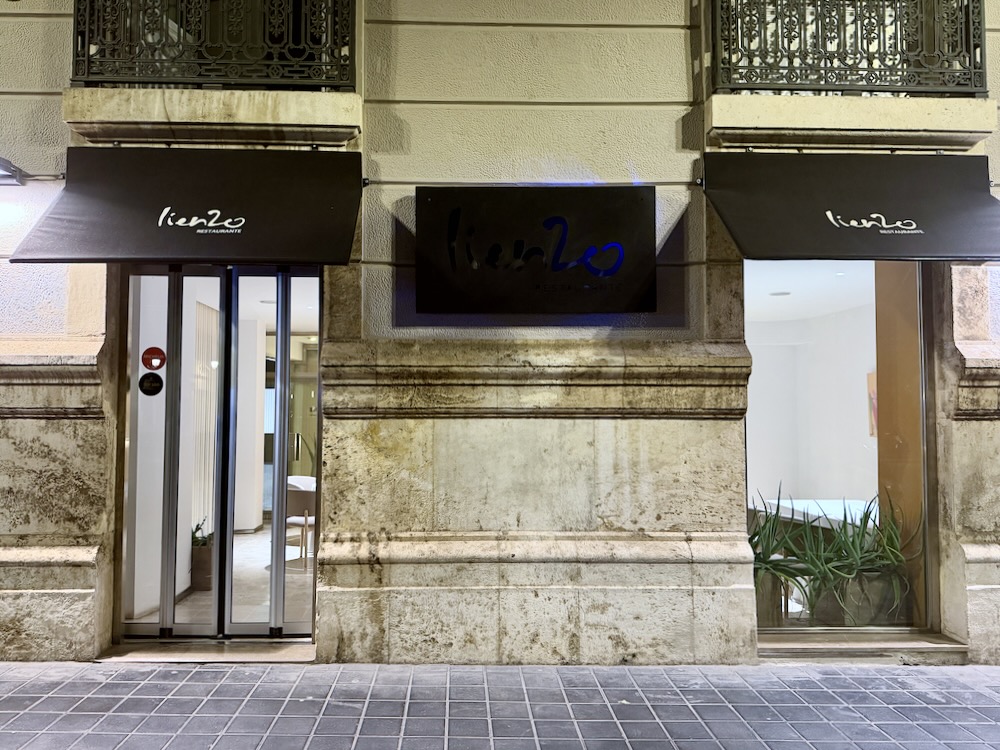
But that happened at Lienzo, a Michelin-star restaurant in Valencia operated by owner-chef María José Martínez, affectionately known as the ‘honey chef’ or ‘defender of urban beekeeping’ due to her proclivity for using pollen, propolis and honeycomb in many of her dishes. Not surprising since she grew up among orchards and beehives in Alhama de Murcia.
Lienzo means canvas in English and that’s exactly how Maria envisioned herself, an artist experimenting with avant-garde Mediterranean cuisine and innovative presentations, thus the wooden hand. She obviously has succeeded as she has held a Michelin star for the last four years.
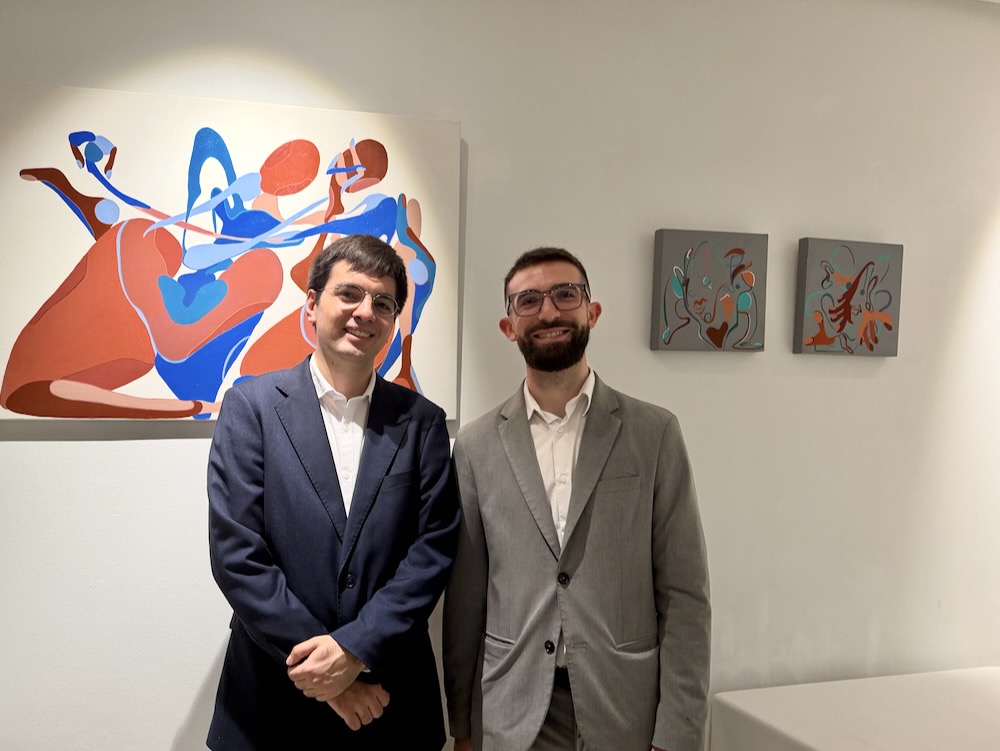
A former art gallery, Lienzo is tucked away off a busy street in the heart of the Spanish city. Here a high white stucco ceiling and walls match crisp white tablecloths, contrast provided only by several colorful works by local artists.
My companion and I were seated at a table close to the open kitchen beside a glass-fronted cava, its shelves of vintage wines beckoning tantalisingly. I counted nine well-spaced tables so overcrowding is not a problem here.
As the evening progressed, intricately woven dishes made it easy to understand how María’s approach to cooking is anchored in a degree in chemistry, followed by studies in party, baking and catering, as well as avant-garde techniques.
And as I watched the efficient, almost clockwork, timing of our servers, Julian from Argentina and Alessio from Spain, it also wasn’t surprising to sense the organisational guidance of María’s husband, and room manager, Juanjo Soria, at work. A man who graduated in gastronomic sciences before training in the world of wine and being awarded first sommelier of the city of Valencia.
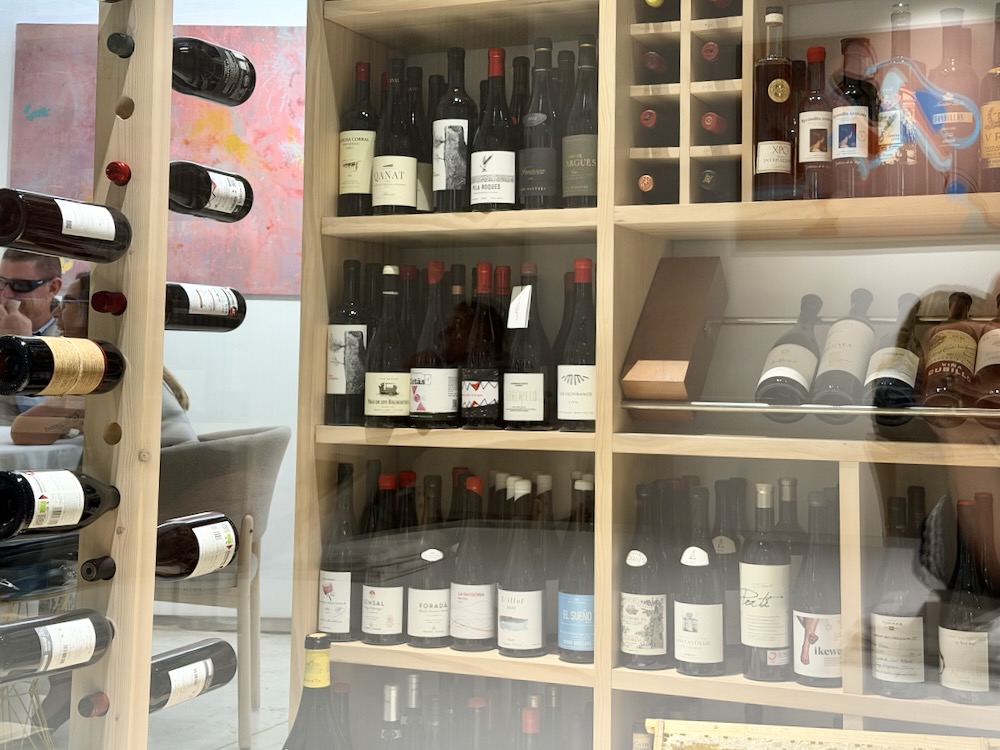
His supervisory skills, precise, almost regimented, were plain to see in our young sommelier, Alessio. I don’t think I’ve met anyone as fast as he in refilling a wine glass. Not only was he fast, he was also well-informed about grape varieties and food pairings. Among the wines presented to us was a sweet, aromatic muscatel from Alicante, a macuca from Setvins de Muntanya, a small-scale wine producer in Siete Aguas, a village enjoying a unique microclimate, and albariño, a fruity, high acidic white wine from northern Spain.
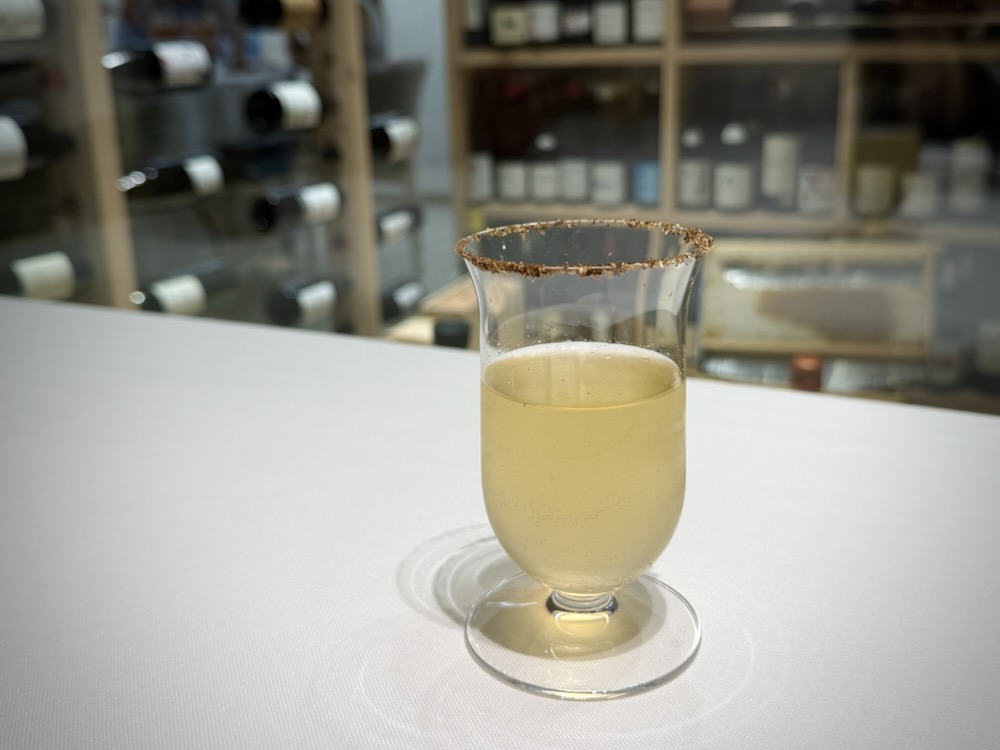
First, before the wine flowed, he presented us with a surprise cocktail, an imaginative concoction of sherry and tomato mead with powdered citric caviar filtered around the rim.
But enough of drinks. Let’s get to the food.
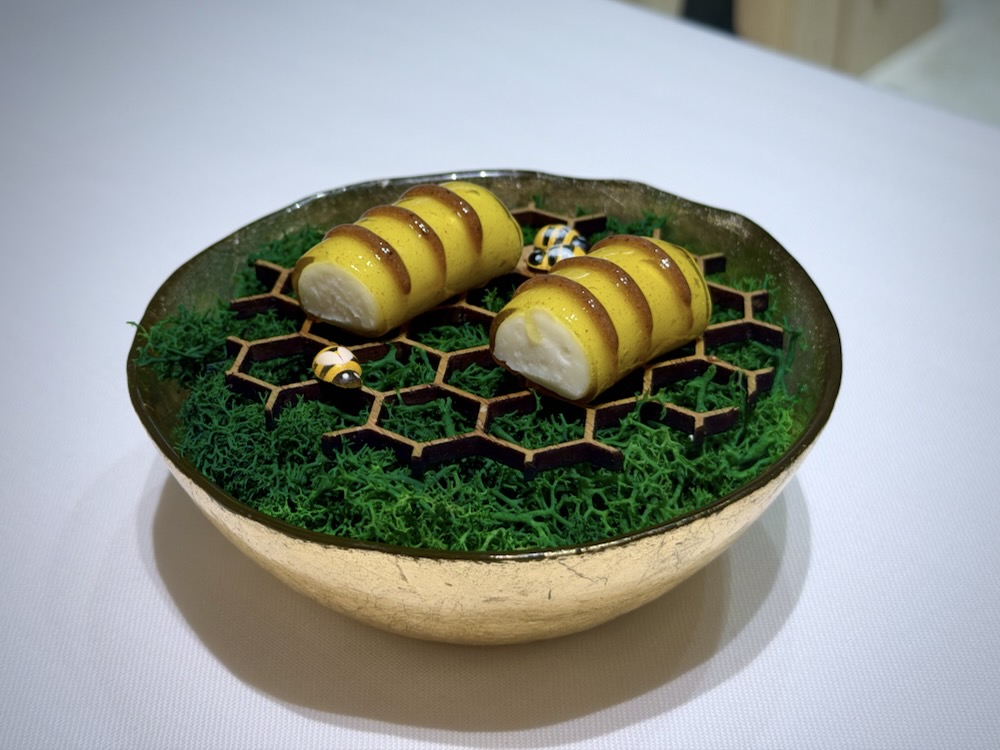
Our first bite of the evening was one of cuatro Pico goat cheese. Wrapped in honey gelee from Murcia and decorated with black garlic honey, decoratively shaped like two bees resting on grass.
Then came the wooden hand, holding a transparent edible bowl of tartar of mullet fish from Albufeira submerged in green seaweed mayo, sprinkled with diamonds of blue spirulina amaranth.
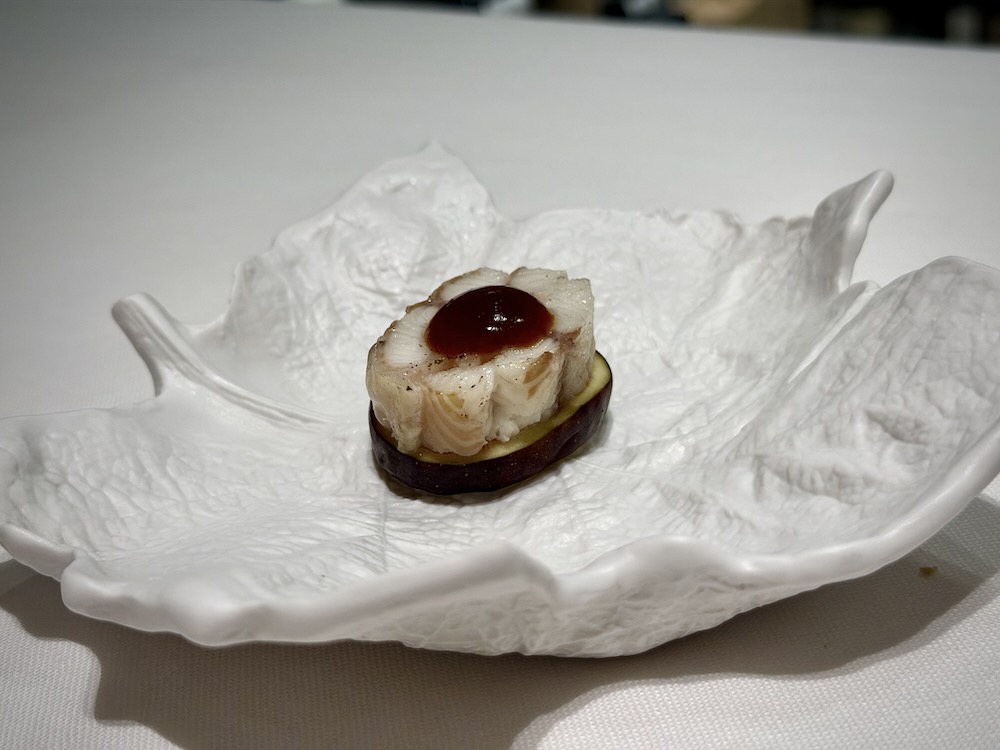
Reflecting María’s unorthodox approach to the culinary arts, our next dish featured disparate elements – a slice of fig topped with salted eel with a homemade, grape-based teriaki-like sauce.
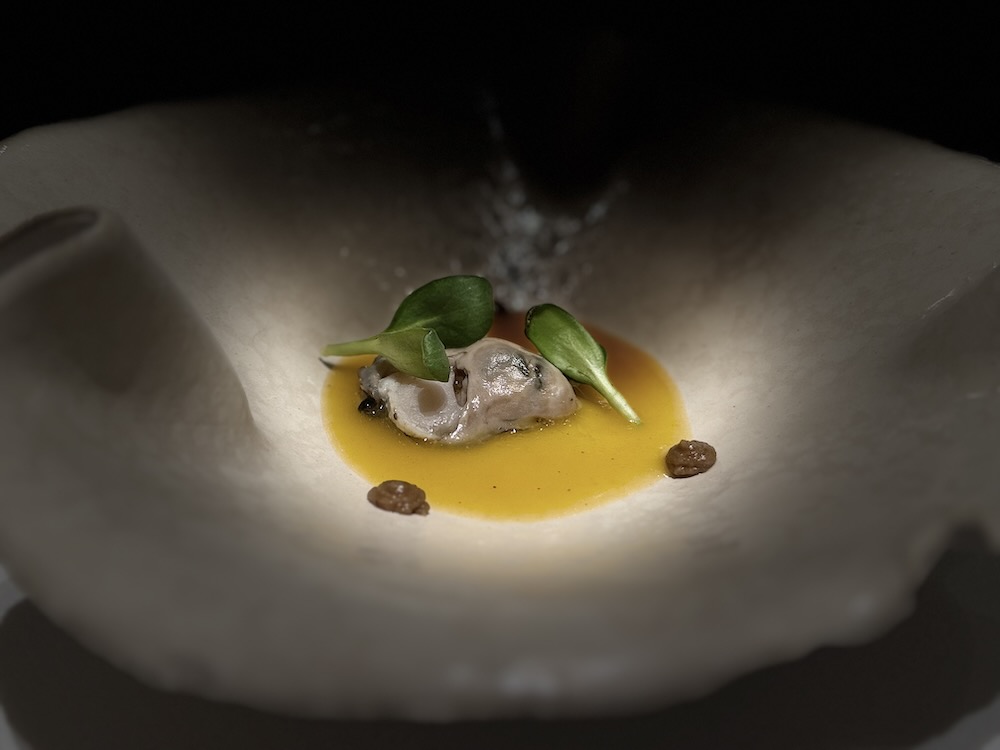
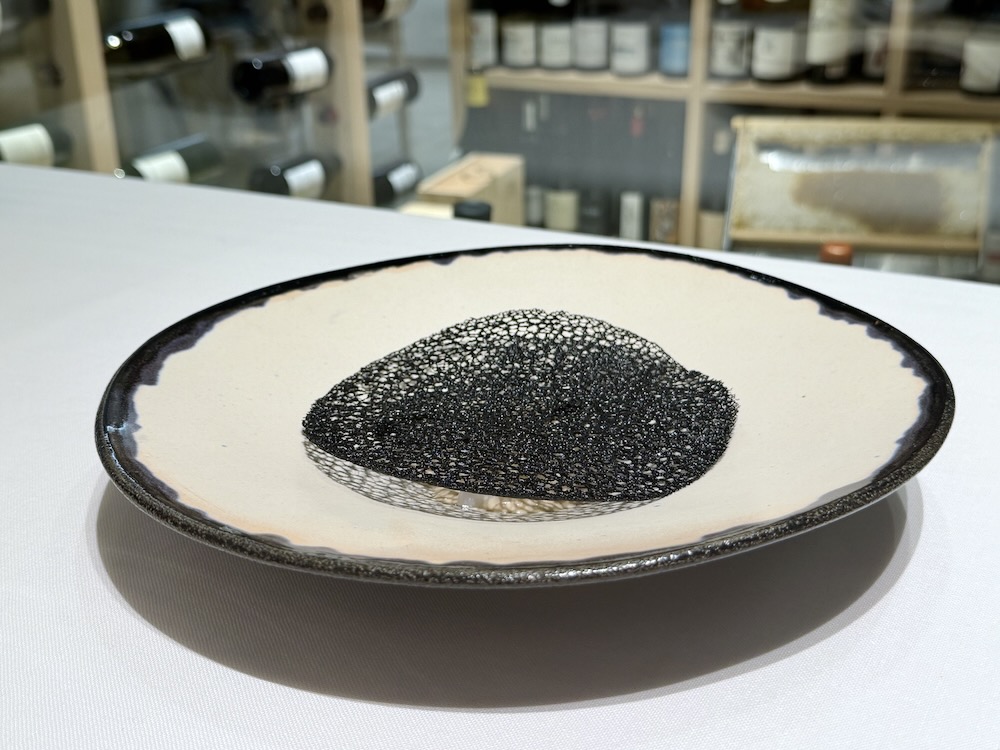
Other creative highlights included a single Valencian oyster swimming in a vegetable and partridge broth glazed with sunflower honey decorated with sunflower shoots as well as squid spaghetti under what I’d term a Coco Chanel lace of squid ink in a sauce of Japanese dashi, garlic and ginger.
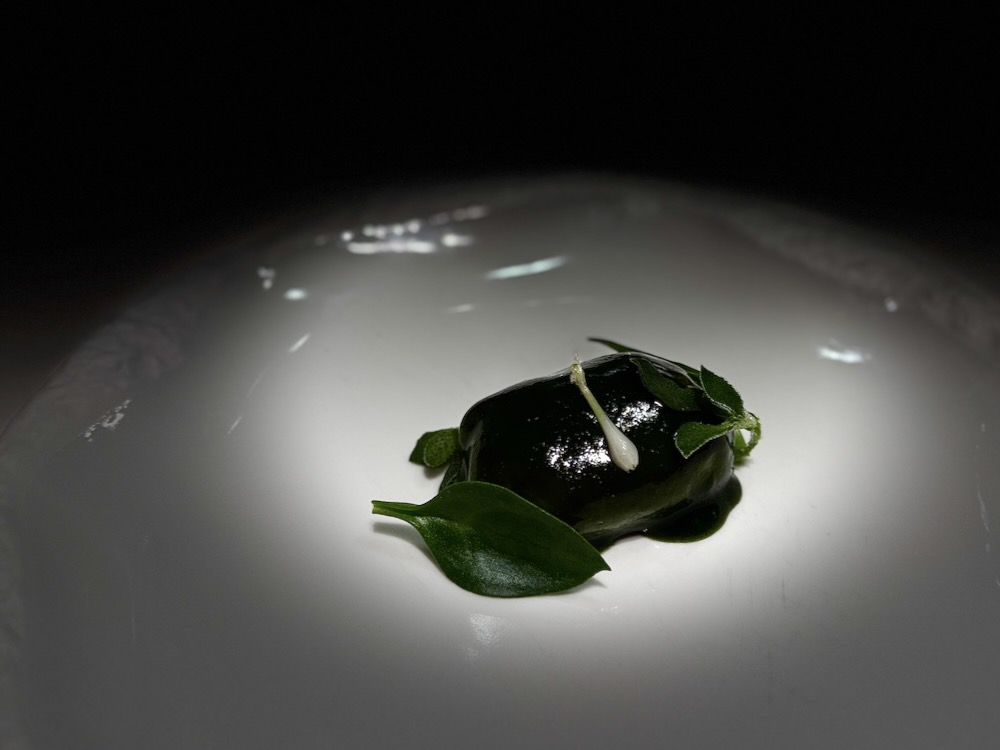
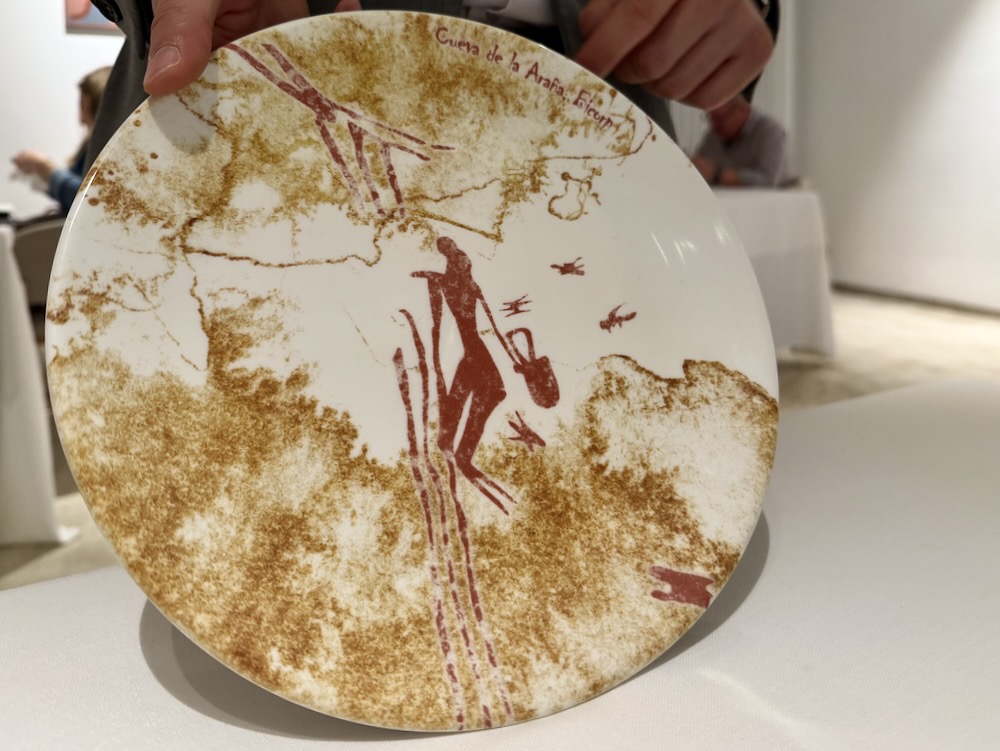
Meat dishes varied from duck cooked as Corsican sausages known as figatelli, wrapped in seaweed, cloves and other spices and decorated with salicornia leaves and fillet of venison served on a specially crafted dish with a 7,500-year-old cave painting of a woman gathering honey, from the very same area where the deer was sourced, namely Arana, south inland of Valencia.
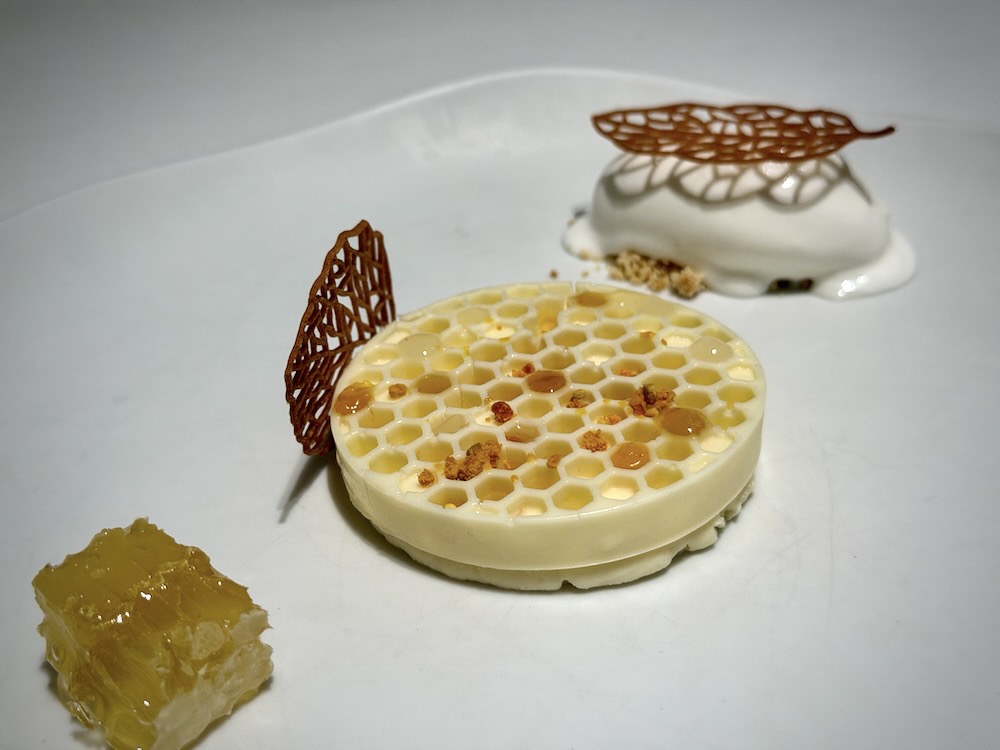
Dessert is a tribute to honey, in three separate parts, a square of honeycomb, white chocolate with grains of pollen and honey ice-cream.
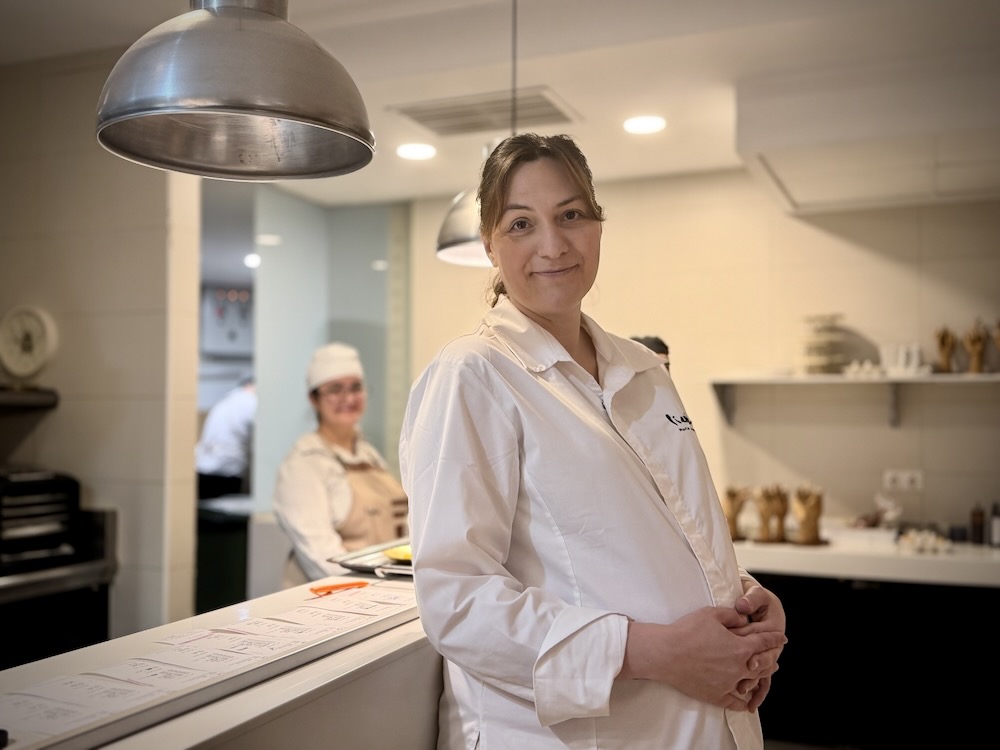
Many congratulations to Maria, while my companion and I dined there, she was ‘exhuberantly pregnant.’ Now she is the proud mother of an infant daughter, Cristina.
 world itineraries