Living in rural Ireland, it’s not often I get the chance to try authentic Indian food but a most enjoyable dining experience at Belfast’s Andhra Bhavan restaurant specialising in cuisine from the continent’s southern region reminded me why this ethnic delight is not just extremely tasty but immensely healthy.
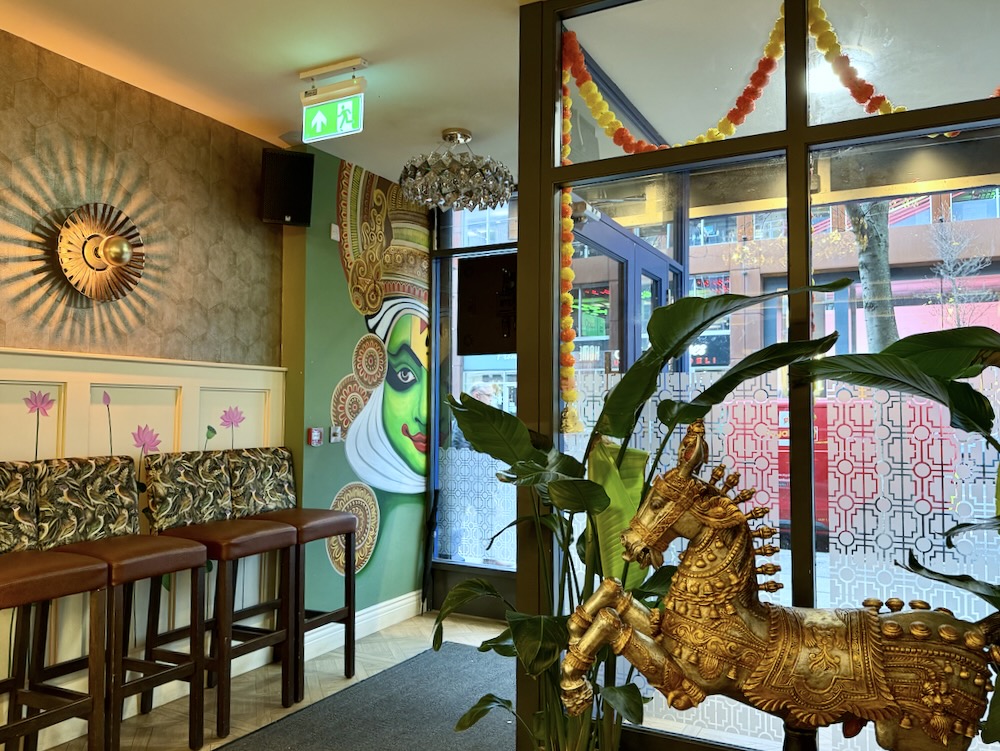
Andhra Bhavan is easy to find, positioned in the heart of the capital city of Northern Ireland, a mere 200 meters from City Hall and the main shopping district. While located on the busy Wellington Place, once through its doors, you’ll enjoy a warm and pleasing atmosphere, with the entrance door designed alcove-style so cold air doesn’t rush in, and very friendly service.
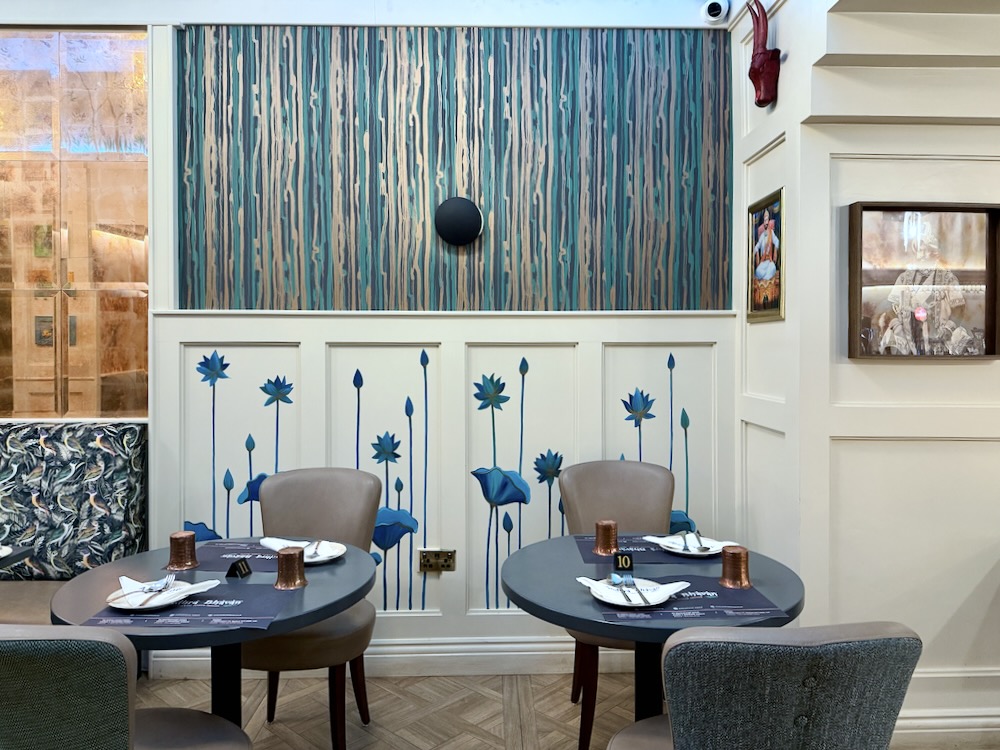
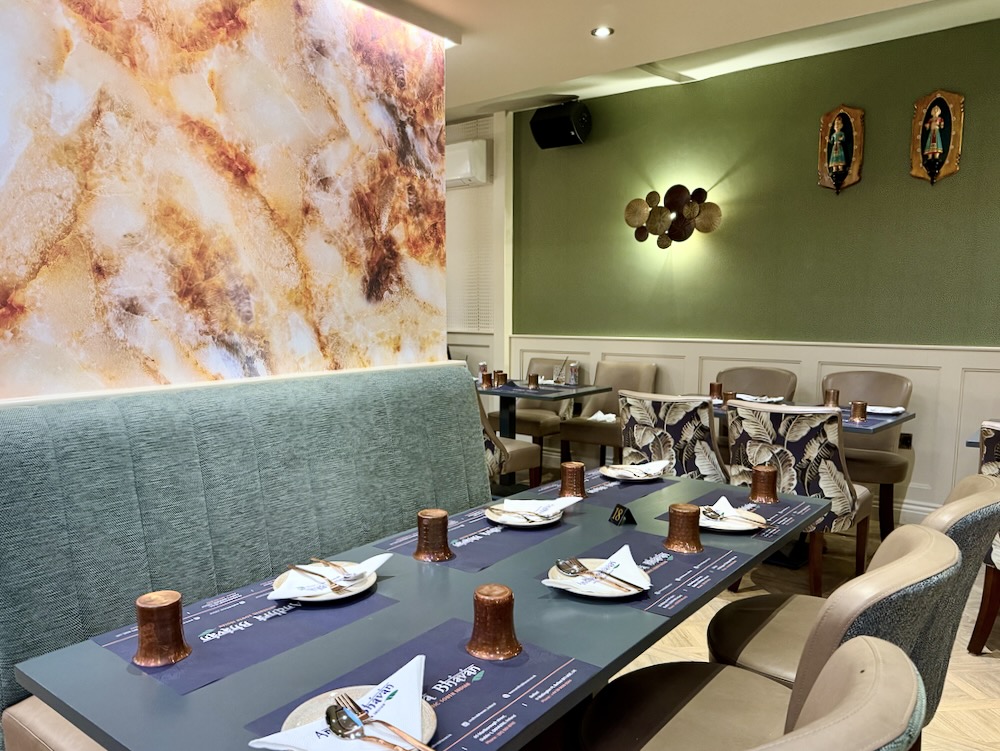
Pride by the owners, Praveen Madire and Sainath Reddy Yelmati, in Indian culture is obvious in the attractive interior decor. My companion and I were seated at a table adjoining a wall which featured hand-painted, multi-colored, three-dimensional depictions of women folk dancers from southern India in traditional costumes performing a classic movement known as bharatnatyam, with actual sari fabric cuttings as an element of the artwork.

Close by were wooden sculptures of elephants and horses symbolic of Indian places of worship. Another artefact hanging from the wall opposite was of Ganesha, the Hindu deity, revered as the remover of obstacles, god of new beginnings, wisdom, and luck, and patron of arts and sciences. Elsewhere, framed photographs focused on bejewelled arms and feet of dancers. A vibrating puppet doll atop the bar in the center of the elongated dining-room was painted in a gay costume, one hand out in blessing and the other in the act of giving, a depiction of generosity of spirit.
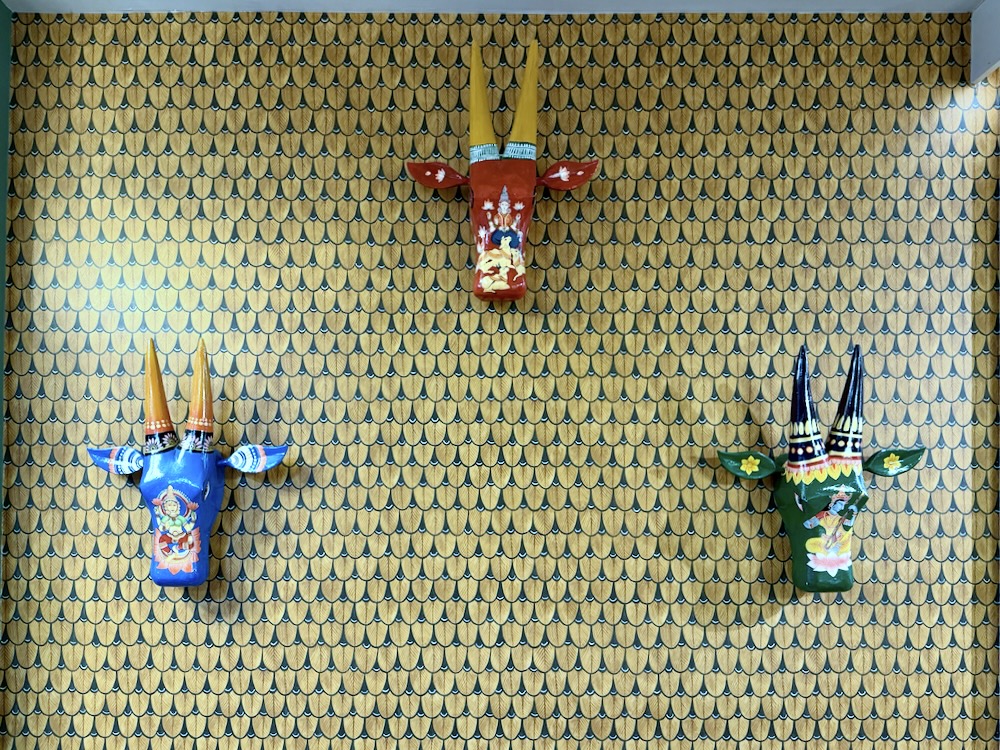
Colorful wooden heads of cows, sacred animals in India symbolising motherhood, sustenance, and divine generosity, with the faces of various gods painted on them adorned another wall. Even the success of Indian sport was represented, with a framed photograph behind the bar of Sachin Tendulkar, dubbed the ‘God of Cricket’ in India and widely regarded as one of the greatest cricketers of all time, the first cricketer to score 100 international centuries and 200 in a one-day international.
Opened in August this year (the company also has two outlets in Dublin), Andhra Bhavan accommodates around 100 people in an elongated-shaped room stretching from the street, with a glass-enclosed dessert stand just inside the entrance and an open bar in the middle of the room, to one side.
I must admit, I didn’t know what to expect in terms of food, not being overly familiar with southern Indian cuisine. But after this memorable experience, I’m a convert.

Through friendly and informative conversation with staff members such as Lakan, I learned that southern Indian cuisine uses more dry spices such as star anise, cinnamon bark and bay leaf, while northern cuisine tends to be more creamy. And also that coffee is a specialty of the south, while tea is more common in the north. Illustrating the wide array of herbs and spices used in India’s cuisine, I also learned there are seven to eight different types of basil, including a red-colored spicy one in the southern region.

To say the menu at Andhra Bhavan is impressive would be a severe understatement. It is so expansive it runs to 18 full pages, well-designed and easy to read, with rich photographs of the various dishes and decorated with illustrations of exotic herbs, plants and trees. Again reflecting the owners’ pride in their country, the last page of menu features illustrated highlights of Indian culture including the massive Warangal Fort in the state of Telangana and kathakali, a form of Indian classical dance from the Kerala region.
Southern Indian food, I learned, is not complete without a wide selection of dosas, thin, crispy pancakes made from fermented rice and lentil batter, served with chutneys and sambar, a warm, tangy South Indian stew made by simmering lentils with mixed vegetables and seasoning it with a fragrant spice blend. And there’s no shortage to choose from here. Two full pages of them, 26 in total, ranging from gun powder masala dosa (dosa sprinkled with spicy podi (gunpowder) and ghee, wrapped around a potato madala filling, described as ‘bold and fiery,’ to onion rava dosa, a lacy crepe made of semolina and rice flour batter mixed with ginger, green chillies and cumin seed, served hot with potato masala.

Vegetarians will be delighted with the menu, two complete pages filled with 19 different choices, from masala vada, deep fried lentil fritters, crispy on the outside and soft inside spiced with onions, curry leaves and green chillies, to aloo bonda comprising spiced mashed potatoes coated in chickpea batter and deep fried, golden, soft inside, crisp outside. To make vegetarians even happier, there are 16 such main courses including dals, paneers and masalas.
Carnivores, fear not. There are 17 meat starters and 16 main courses, including Andhra chicken curry, lamb chettinadu, keema with tandoori roti and lamb saagwala.
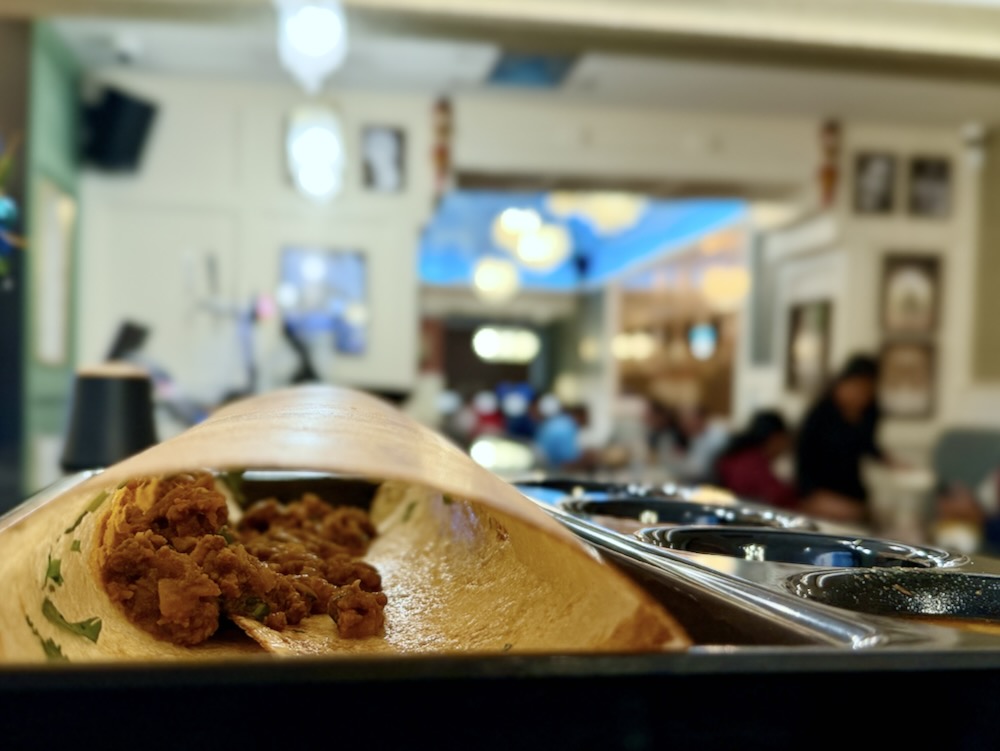
My companion and I chose both a vegetarian and a meat dosa for comparison purposes (or that’s how we rationalised it). One was mysore masala dosa with spicy red chutney inside and stuffed with potato masala, a Karnataka-style specialty. The other, keema dosa, a crispy dosa with mince lamb and Mughlai flavors.
The next dishes arrived in charming, double-handled, square copper dishes, with two baskets of naan and flat bread. They included rasam, a tomato-based soup with lots of herbs and curry leaves and sambar with cardamon, black pepper, peanuts and coconut, as well as gutti vankaya, a curry with baby eggplant stuffed with spiced peanut-coconut masala, simmered in rich Andhra-style gravy. There was also paneer makhani, with soft paneer cubes in a velvety butter tomato sauce mildly sweet and fragrant with fenugreek, served with pulao rice, a basmati rice with mild spices and ghee.

I counted seven different bread types on the menu, including tandoori roti, wheat flatbread baked in clay tandoori oven for smoky flavour, and malabar parata, a flaky, layered flatbread from the Kerala region. As side accompaniment, we could also have chosen from four types of rice, including curd with mango pickle.
Feeling more than satiated, we felt desserts were beyond our digestive capabilities, that is until we took a closer look at the glass-encased stand across from our table. Kulfi, traditional ice-cream made with thickened milk and flavored with cardamom and nuts, seemed appealing, but it being cold out, we instead opted for cheesecake, not Western-style but a mound of soft sweetness half-submerged in milk syrup.
Andhra Bhavan offers a range of drinks including leading Indian beers, Kingfisher and Cobra on tap. I also noticed a wide selection of wines on the bar counter. Non-alcoholic options included mango lassi, a creamy, cooling yoghurt with mango which we thoroughly enjoyed before eating, and salat lassi, a refreshing salty yoghurt drink blended with cumin and herbs.
If you’re in Belfast, a charming city of friendly people and well worth a visit, make your stay even more enjoyable. Book a table at Andhra Bhavan.
 world itineraries