A beacon for music of all kinds, and particularly the classical orchestral genre, the historic Ulster Hall in downtown Belfast recently hosted a most enjoyable performance entitled ‘After The Rain…’
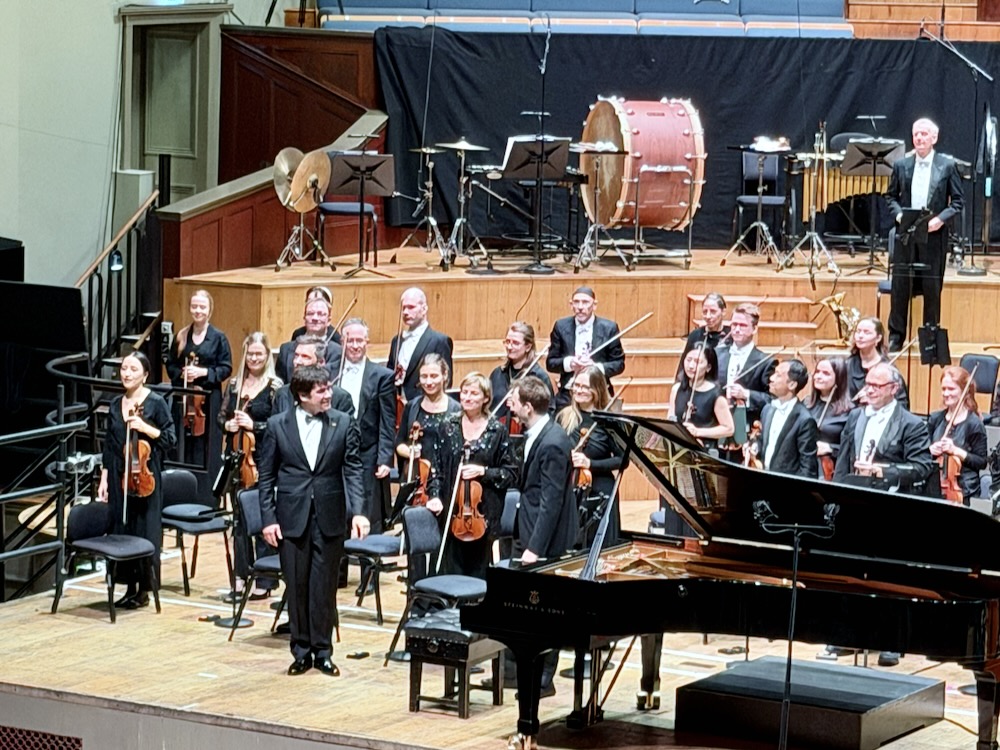
The programme featured Ludwig Van Beethoven’s final piano concerto No. 5 in E. Flat, Op. 73 as well as Piotr Ilyich Tchaikovsky’s Symphony No. 4 in F Minor, Op. 36, which opens, as the evening programme indicates, “with a solemn fanfare and recurring theme of fate, twisting and contorting towards an uplifting close.”
On the evening, the Ulster Orchestra was seamlessly conducted by Andrew Gourlay with guest pianist, Vadym Kholodenko.

A particular highlight of the entertainment was the world premiere of a delightful and evocative work by young composer, Amelia Clarkson from Donaghadee just outside Belfast, entitled ‘The Rain Keeps Coming,’ her third orchestral piece in the past year, following new works for the National Symphony Orchestra of Ireland and the BBC Scottish Symphony Orchestra. Interestingly, in the programme notes Clarkson says she finished the last barline just five weeks before the show. Though, as she added, “the music has been living in my head for months, and perhaps subconsciously even longer.”

Clarkson, who co-founded Six Dance Collective two years ago with choreographer, Ruaidhrí Maguire and with whom I had the pleasure of meeting briefly after the performance, said ‘The Rain Keeps Coming’ is “about finding the magic in feeling alive, even when caught in a downpour.”
I was very impressed with Clarkson’s wonderfully poetic description in the programme, “For The Rain Keeps Coming,’ movement lives in the orchestration, with scatterings of detail rippling through the ensemble like droplets.”
She added, “From the heaviness, the trumpets bring a coy playfulness which grows into a sparkling, sizzling texture across the orchestra. At its heart, this work is about overwhelm. Scuttling woodwinds and surging glissandi in the trombones lead to the only true tutti passage of the piece – the sensation of being drenched for better or worse, and surrendering to it. The closing bars bring a watercolour of renewal, punctuated by distant thunder.”
As for the Ulster Orchestra itself, it was founded in 1966 and performs around 40 concerts every year, both at its home at the Ulster Hall, and at The Waterfront Hall, one of Belfast’s leading concert venues.
If you visit Belfast, try to book a ticket for one of the performances. I doubt very much you’ll regret it.
 world itineraries