Walking into Galerie Jantzen in Paris is like travelling through time, filled as as it is with hundreds of rare and ornate artefacts reflecting the social whims of past eras.
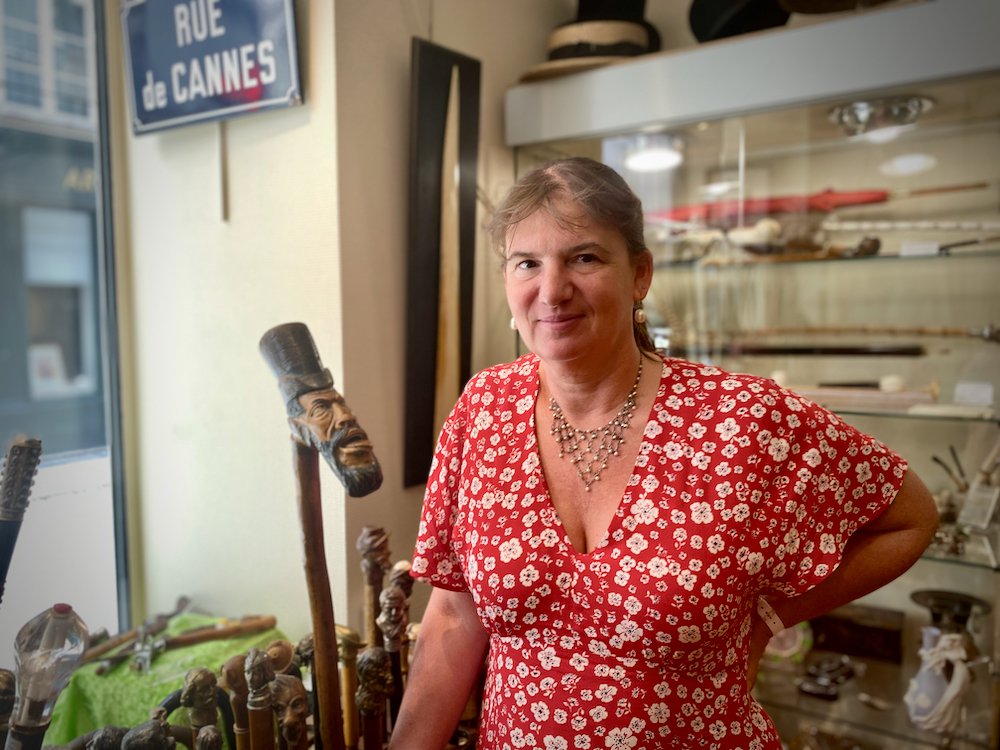
At a quick glance from the outside, the shop is simply one selling a wide assortment of walking canes. But look a little closer through the window and your eyes will surely open wide with surprise.
Is that a violin inside a walking cane? Impossible!
Step through the door and continue to gaze in wonder around a charming interior filled with more than 1,000 canes of all kinds, a veritable treasure trove of curiosities collected by Chloe Jantzen (54) and her now deceased mother, Laurence. The latter started her collection of canes 40 years ago, focusing on antique ones, first in Versailles, in ‘au passage de la Geole,’ a place for antique dealers, then in ‘Le Louvre des Antiquaires.’ In 2014, Chloe, bored working for international companies, joined her mother. In 2015, they moved from ‘Le Louvre des Antiquaires’ to their shop, ‘Galerie Jantzen,’ in the ‘Carré Rive Gauche,’ well-known for antique dealers.
“We were fascinated by the immense variety of canes and how they reflected fashion and social trends throughout history,” said the friendly and well-informed Chloe when my companion and I visited the shop one afternoon.
There are so-called ‘gadget canes’ such as one for picnics in which a knife, fork and wine opener are hidden inside; another with a weighing scale inside; and yet another with a spiked head or a revolver – for defence purposes.
There are also canes with swords, blow darts, glass vials for absinthe, a flashlight and a periscope cleverly hidden inside.
Then there are the ‘decorative canes’ made from a wide variety of eclectic materials including the tail of a stingray, snake spine, ram’s horn, shark cartilage, tortoise shell, warthog tusk, slices of paper, the skin of a hippopotamus, porcelain, plexiglass and straw. Others are made from ebony, snakewood, silver and even gold.
One outstanding cane is created in impressive art nouveau style, the designer being none other than René Lalique, a leading avant-garde jeweller and a master glassmaker of the 19th and 20th centuries. Such was his reputation, his clients included famed actress Sarah Bernhardt. He even designed perfume bottles for François Coty.
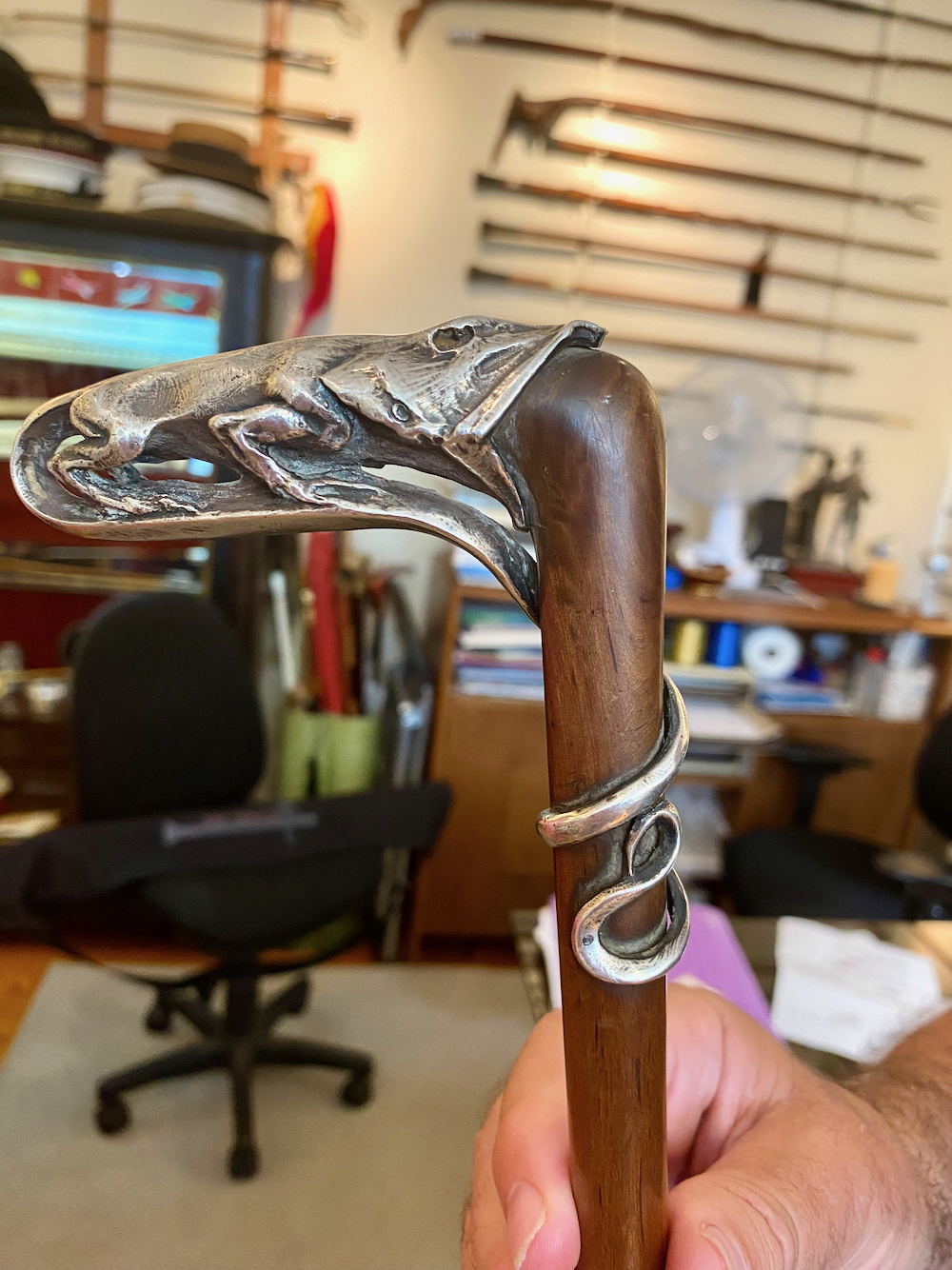
The handles of many canes at Galerie Jantzen are pure works of art, intricately designed in a myriad of ways including the faces of former French Presidents, well-known writers, Marian, the symbol of France, mermaids, gargoyles, jewels, even a chameleon. One depicts a man’s face with a switch at the back that makes his mouth and eyes open and his tongue stick out.
One of the most popular emblematic handles depicts a greyhound, not for any aesthetic reason but a practical one. The long noses of such dogs means the handle is easier to use.
An intriguing collection reflects the habits of an eccentric group of men in the 18th century known as the ‘Incroyables’ (Incredibles) and their female counterparts, the ‘Merveilleuses’ (Marvellous Women), a fashionable aristocratic subculture in Paris who greeted the new post-Revolutionary regime with an outbreak of luxury, decadence, and even silliness, including ridiculous and effete balls, fashion trends and mannerisms.
Canes in the collection at Galerie Jantzen span centuries, the oldest dating from the 17th century. Cost varies, from as little as 80 euro to over 25,000 euro, with the average price being between 600 and 2,000 euro. Sales are both online and walk-in.
The sheer diversity of canes, their beauty and their social significance means the Jantzen collection is well worth a visit.
 world itineraries